Spend a little time around rhythmic gymnastics and you will hear about levels. Another parent mentions Level 4, a meet schedule lists Level 6, and it is fair to wonder where your daughter fits and whether she needs a level at all.
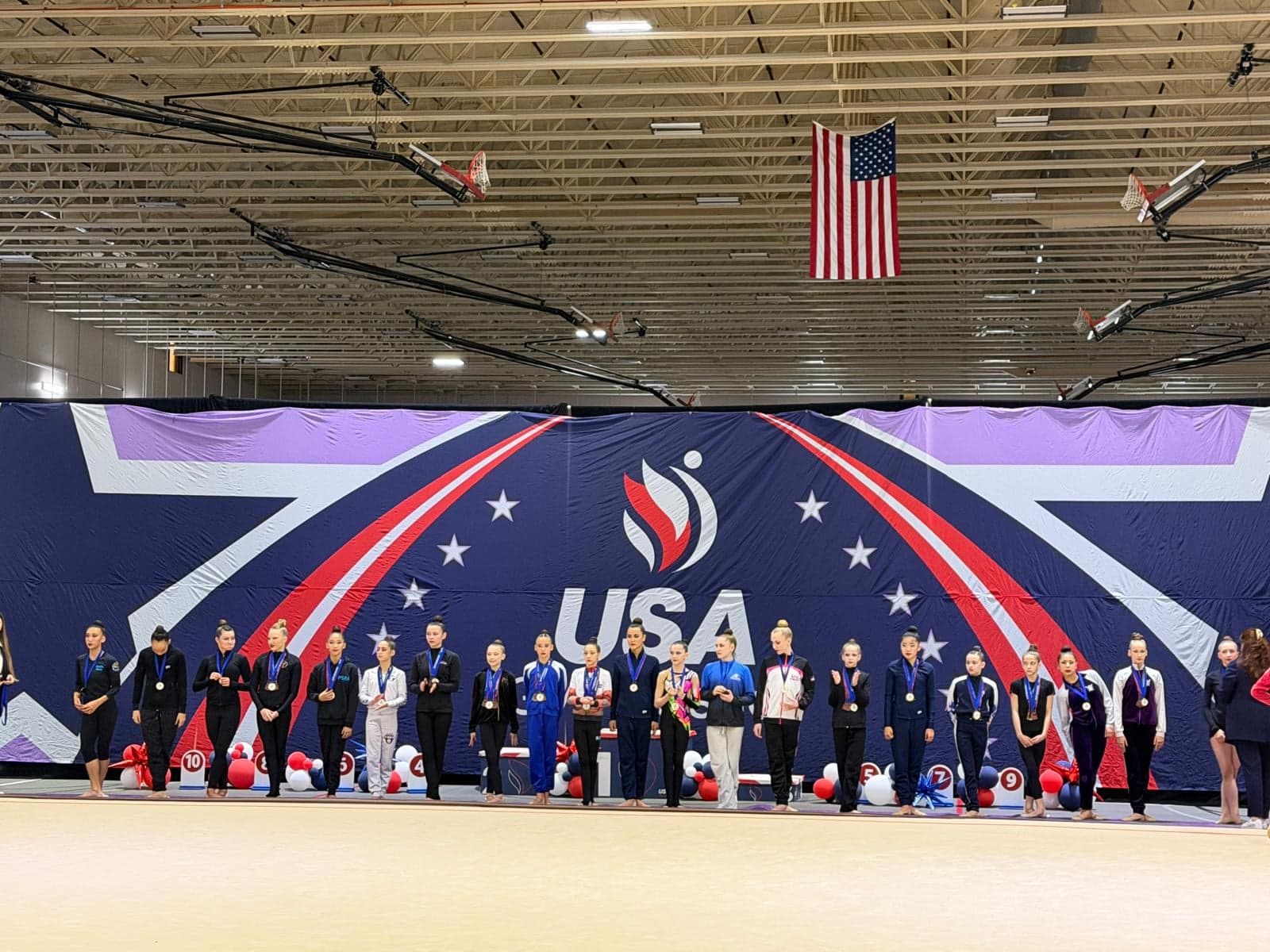
Here is the short version. USA Gymnastics, the sport's national governing body, sorts competitive rhythmic gymnasts into levels. Its Development Program (DVP) has pre-competitive Levels 1 and 2 and competitive Levels 3 through 8, and the USA Hope, Junior and Senior levels sit above it. Those are the levels this guide covers; USA Gymnastics runs other programs too. A level describes where a gymnast competes. A class is where she learns and trains.
Where RRT's classes fit
Our Recreational and Homeschool classes are classes, not USA Gymnastics levels. Neither one is a numbered level, and neither is a step a girl has to complete before competitive training.
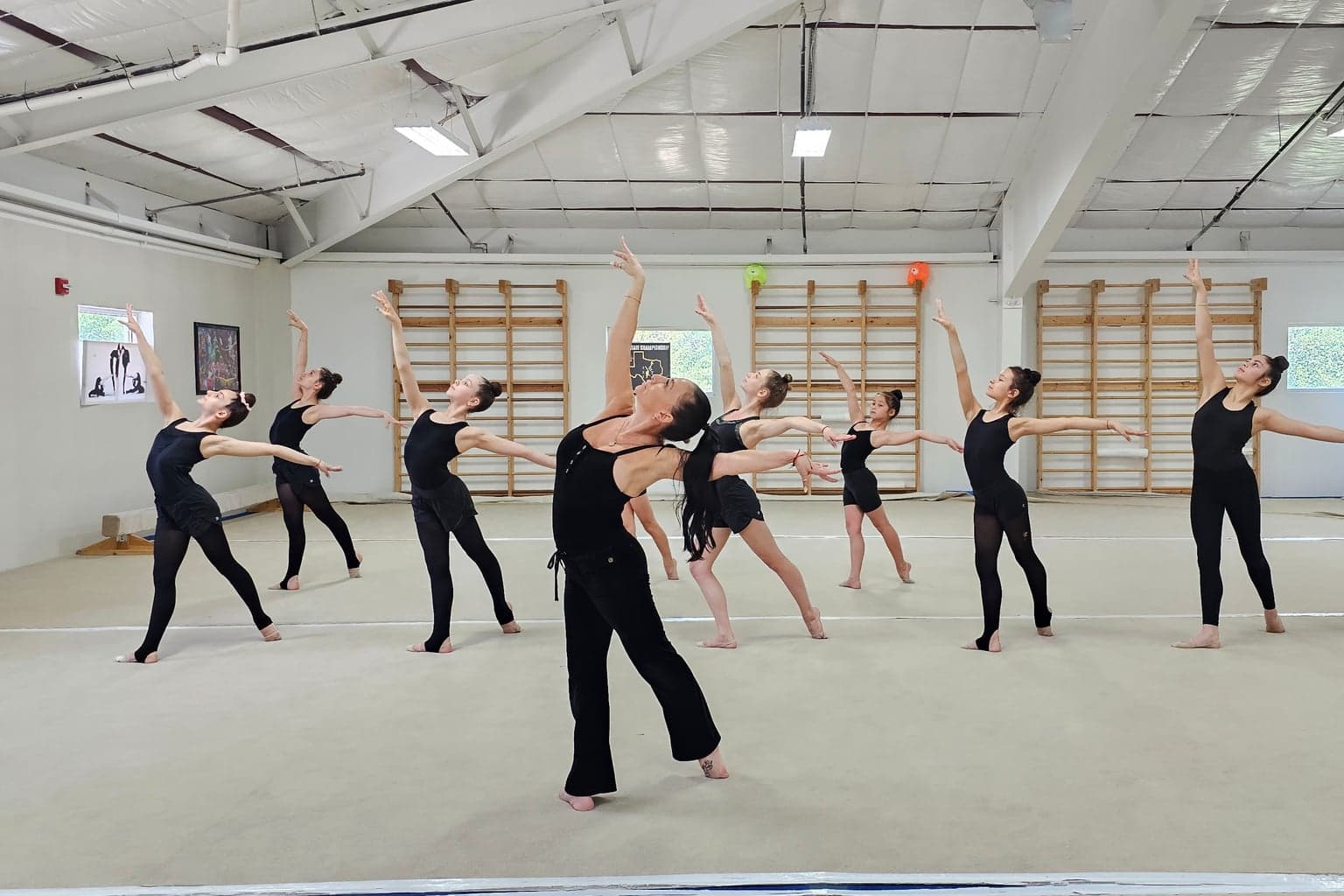
Recreational (ages 8 to 18) is a weekly class, and no experience is needed. It suits a beginner as well as a student who already knows rhythmic gymnastics and wants a friendly, non-competitive setting. Competition is optional. Read more about the Recreational class.
Homeschool (ages 5 to 12) is a 60-minute class for students whose families homeschool. It introduces rope, hoop, ball and ribbon along with floor and body skills, with time alongside other homeschool students. Read more about the Homeschool class.
A girl can take these classes simply because she enjoys them, and never compete. If she later wants to compete, the way in is an evaluation for our Competitive Program, whichever class she has been taking.
How the levels are organized
The USA Gymnastics Development Program covers the pre-competitive Levels 1 and 2 and the competitive Levels 3 through 8. Under the USA Gymnastics rules, Level 3 is the first evaluation stage in a gymnast's competitive development, and each level after it is for the gymnast who can successfully perform the skills and apparatus requirements of the level before.
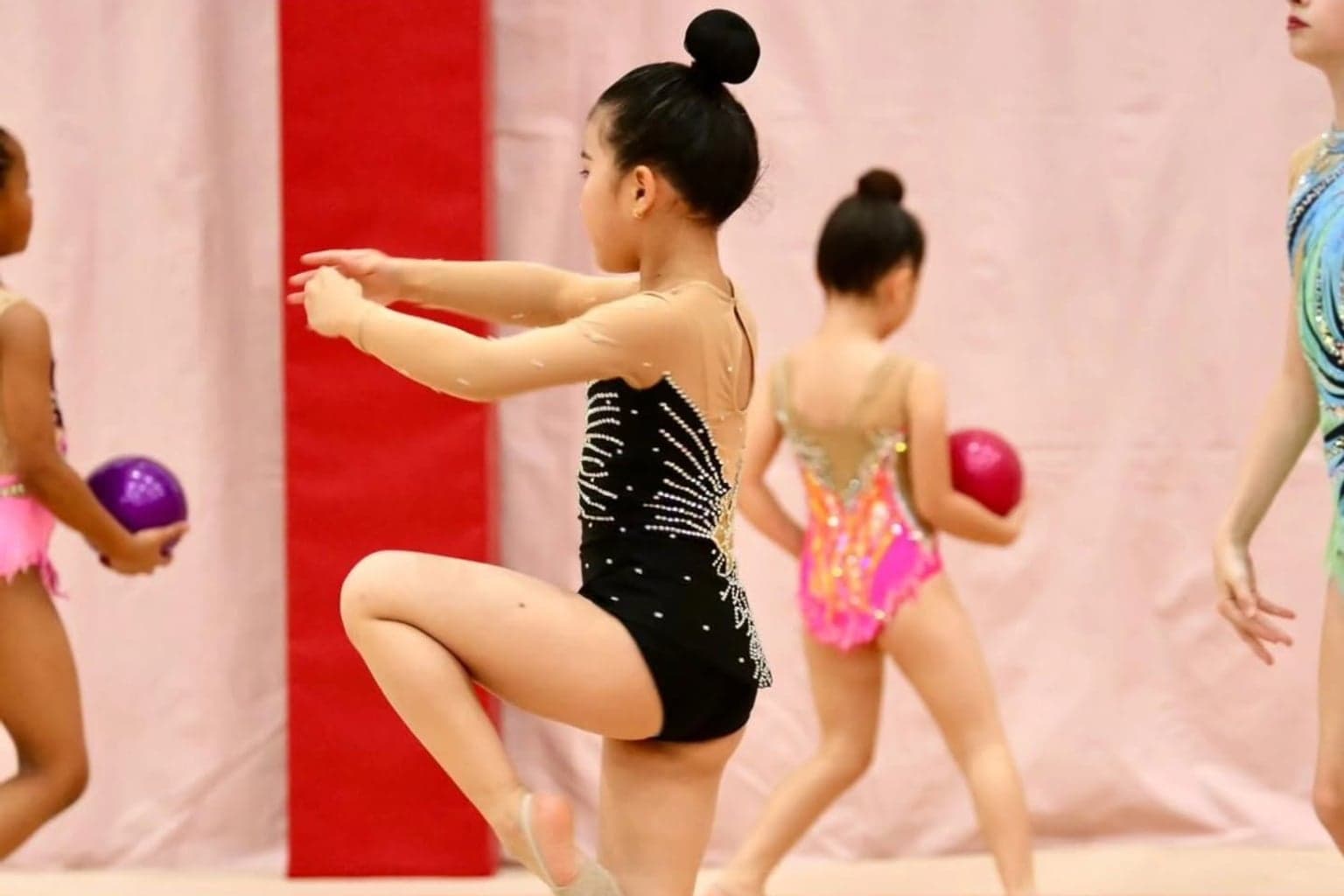
The routines grow with the levels. A Level 3 gymnast competes two routines set by her club: floor exercise and one apparatus. Level 4 gymnasts compete a synchronized group floor routine and two individual apparatus routines. From Level 5, gymnasts compete four individual routines, floor exercise and three apparatus. Levels 5 and 6 also compete a group floor routine, and Levels 7 and 8 are designed to prepare gymnasts for the advanced skills of the FIG program, which follows international rules.
Above the Development Program are the USA Hope, Junior and Senior levels, for accomplished gymnasts who have completed the Development Program levels and are physically ready for the FIG requirements. Elite is a designation for Hope, Junior and Senior gymnasts who qualify to the USA Gymnastics Elite Championships.
Minimum ages for each level
Each competitive level has a minimum age. Under USA Gymnastics rules, a gymnast must turn that age by December 31 of the year of that season's State Championships.
- Levels 3 and 4: turns 6
- Level 5: turns 7
- Level 6: turns 8
- Level 7: turns 9
- Level 8: turns 10
- USA Hope: turns 11
- USA Junior: turns 13
- USA Senior: turns 16
A minimum age sets the earliest a gymnast may compete a level. It does not mean she is ready for that level at that age.
Where a new gymnast starts
A gymnast entering the Development Program for the first time does not always start at Level 3. She may enter the level that fits her skills, and under the rules the coach makes that call based on her physical and emotional readiness. She must also meet the minimum age for the level she enters.
At RRT, the Competitive Program is by invitation. Families may request an evaluation, and the coach determines placement.
How moving up works
Gymnasts move up through the levels in order, from one competitive season to the next. Under USA Gymnastics rules:
- A gymnast at Levels 4 through 8 must compete all-around at her State Championships to be eligible for the next level the following season. A petition for injury, illness or extenuating circumstances must be approved by the Regional Chair before the next season starts.
- She may not skip more than one level from one season to the next. A Level 3 gymnast may move to Level 5 the next season, for example, but not to Level 6.
- Once she has competed at her State Championships, she may not move down a level except by petition to the Regional Board.
- A gymnast may compete USA Junior or Senior only after competing at least one year in the Development Program.
Within those rules, her coach decides when she is ready for the next level. There is no set timeline for moving up, and gymnasts move at different speeds.
Where to go from here
If she is new to rhythmic gymnastics, book a free trial class at our McKinney or Frisco studio. Our competitive program page has more on each level, and our guide to the competitive path covers what competing asks of a family.