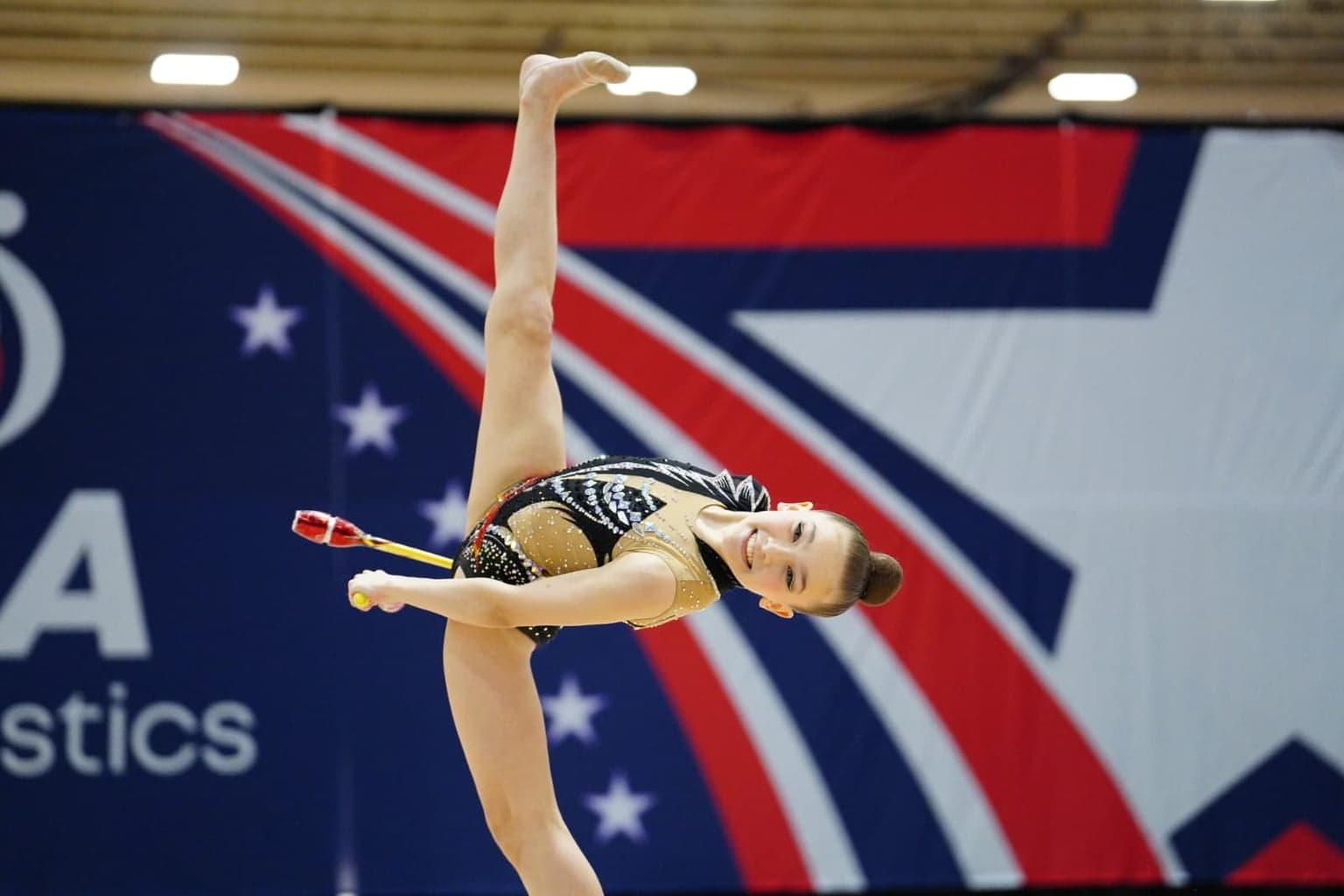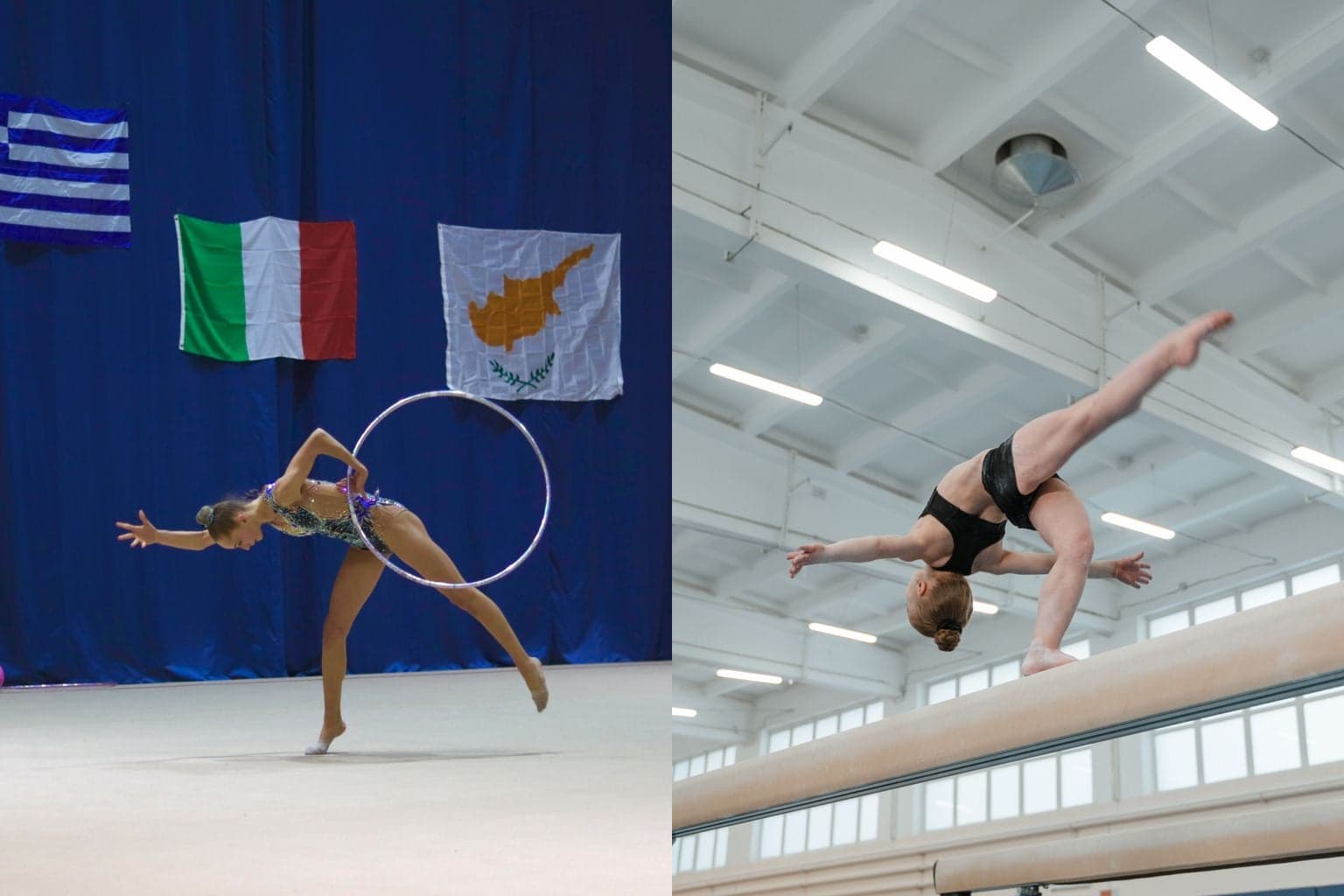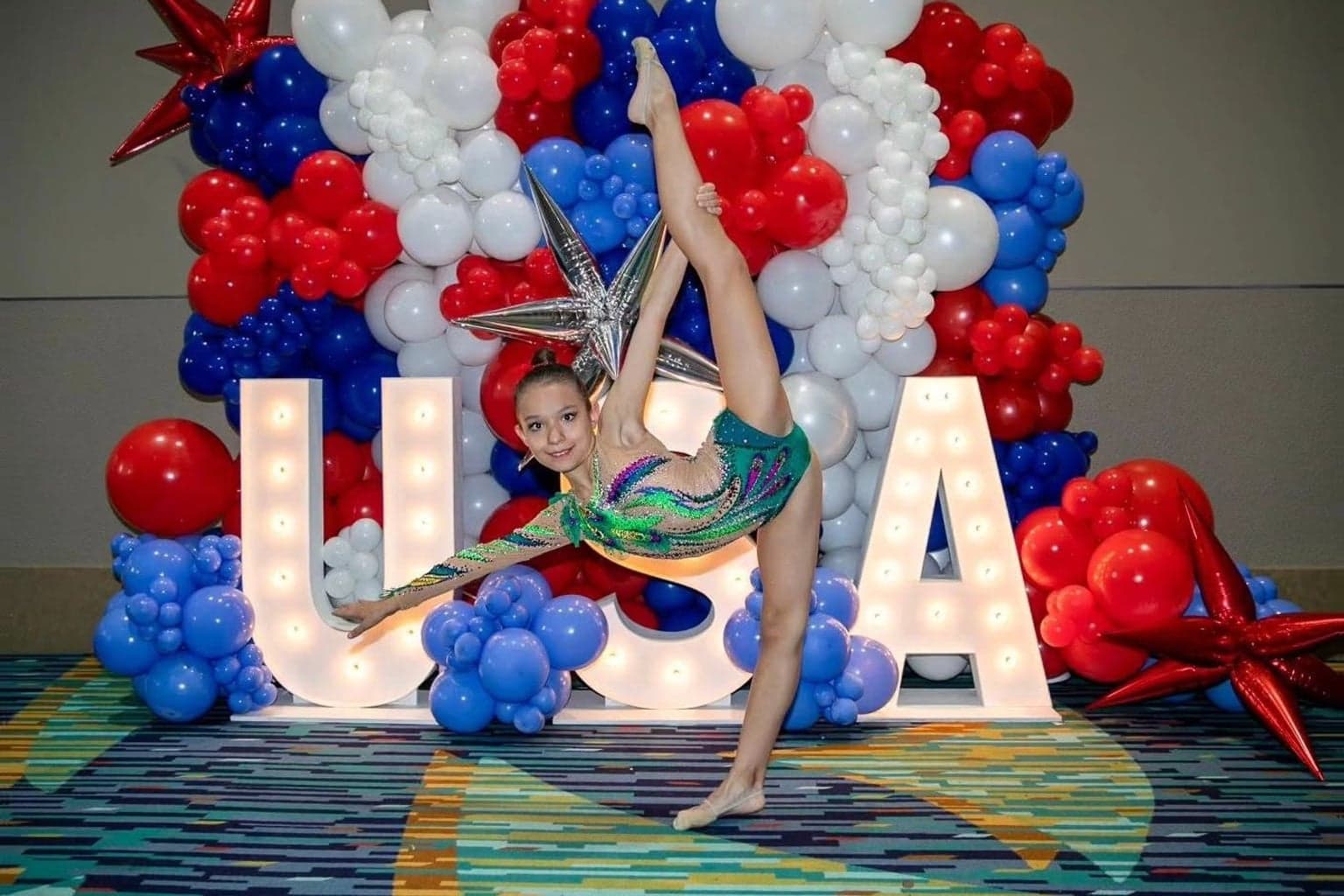
When most people think of rhythmic gymnastics, the first thing that comes to mind is flexibility - and for good reason. Full splits, deep backbends, leg extensions above the head, and fluid body waves are all part of the sport's visual language.
The flexibility rhythmic gymnastics builds is trained actively and under control, and it tends to carry over into the other physical things your child does.
Why Flexibility Matters for Children
Flexibility is one of the five components of physical fitness, alongside cardiovascular endurance, muscular strength, muscular endurance, and body composition.
What we tend to see in children who train flexibility consistently:
- Greater range of motion to work with, which shows up across physical activities
- Better posture and body alignment as they grow
- Improved body awareness and proprioception (knowing where your body is in space)
- More comfortable movement through positions that used to feel awkward
How Rhythmic Gymnastics Develops Flexibility
In rhythmic gymnastics, flexibility is part of most of what a gymnast practices.
Active stretching, not just passive
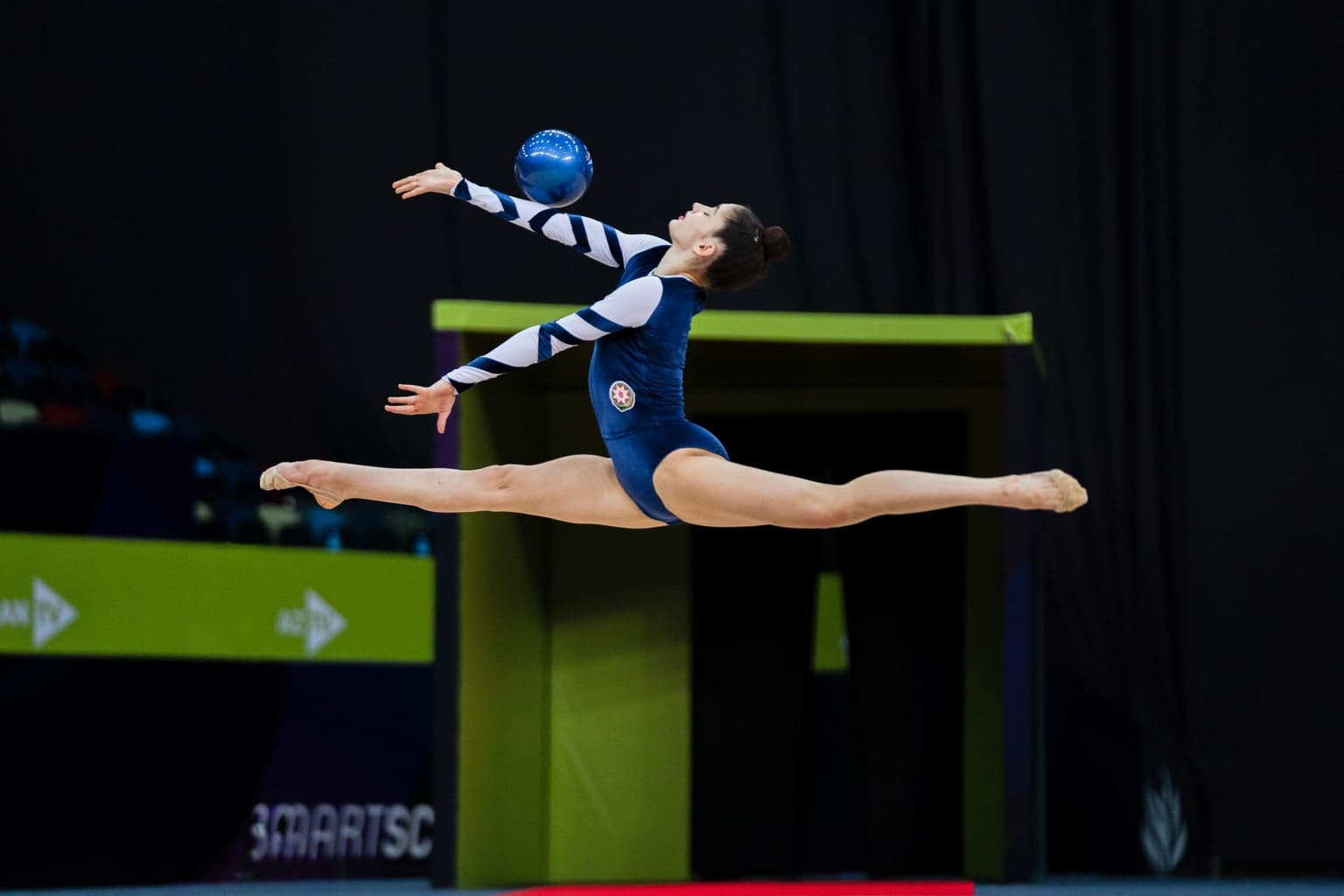
In many sports, stretching happens before or after the main workout. In rhythmic gymnastics, flexibility is trained actively throughout the session. Gymnasts hold their legs at extreme heights while balancing on one foot. They arch backward while manipulating an apparatus. They perform splits in mid-air during leaps. This builds strength at the end ranges of motion, which is what makes the range usable rather than something a child can only reach on a good day.
Every class includes dedicated flexibility work
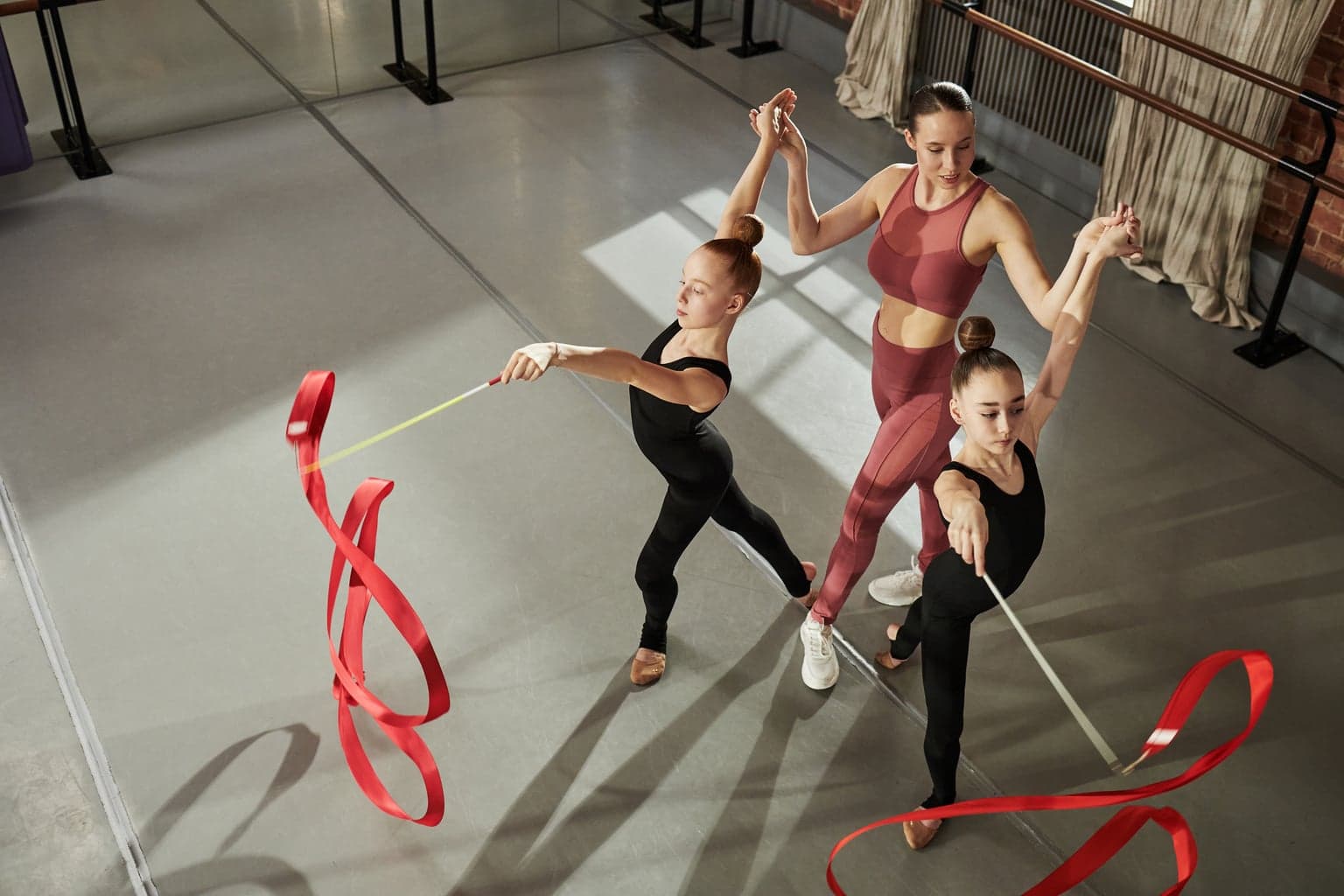
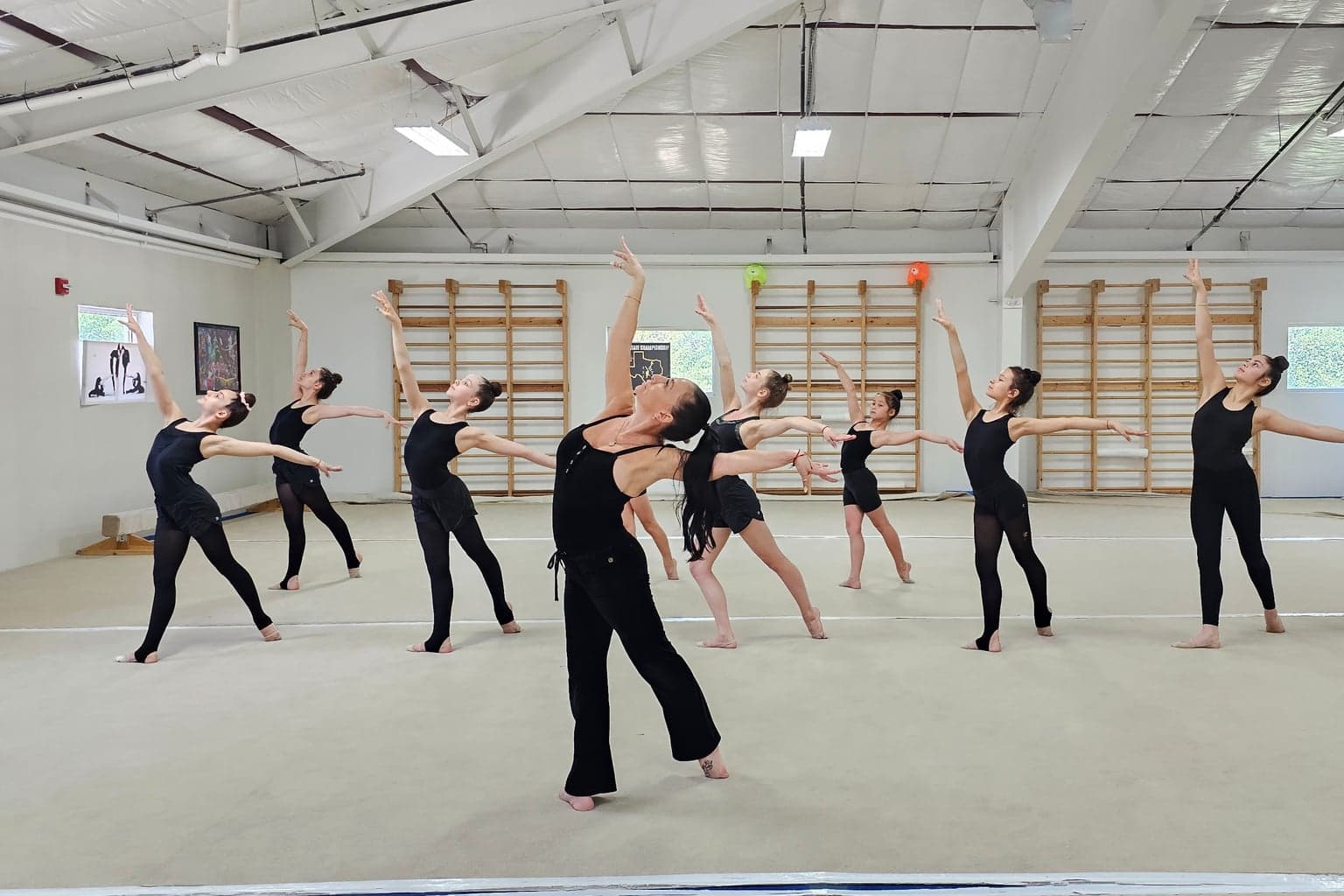
In our programs, every session allocates time specifically for flexibility development. For younger children, this looks like playful stretches with fun names. For older gymnasts, it includes structured splits training, back flexibility progressions, and shoulder mobility work.
Apparatus handling requires range of motion
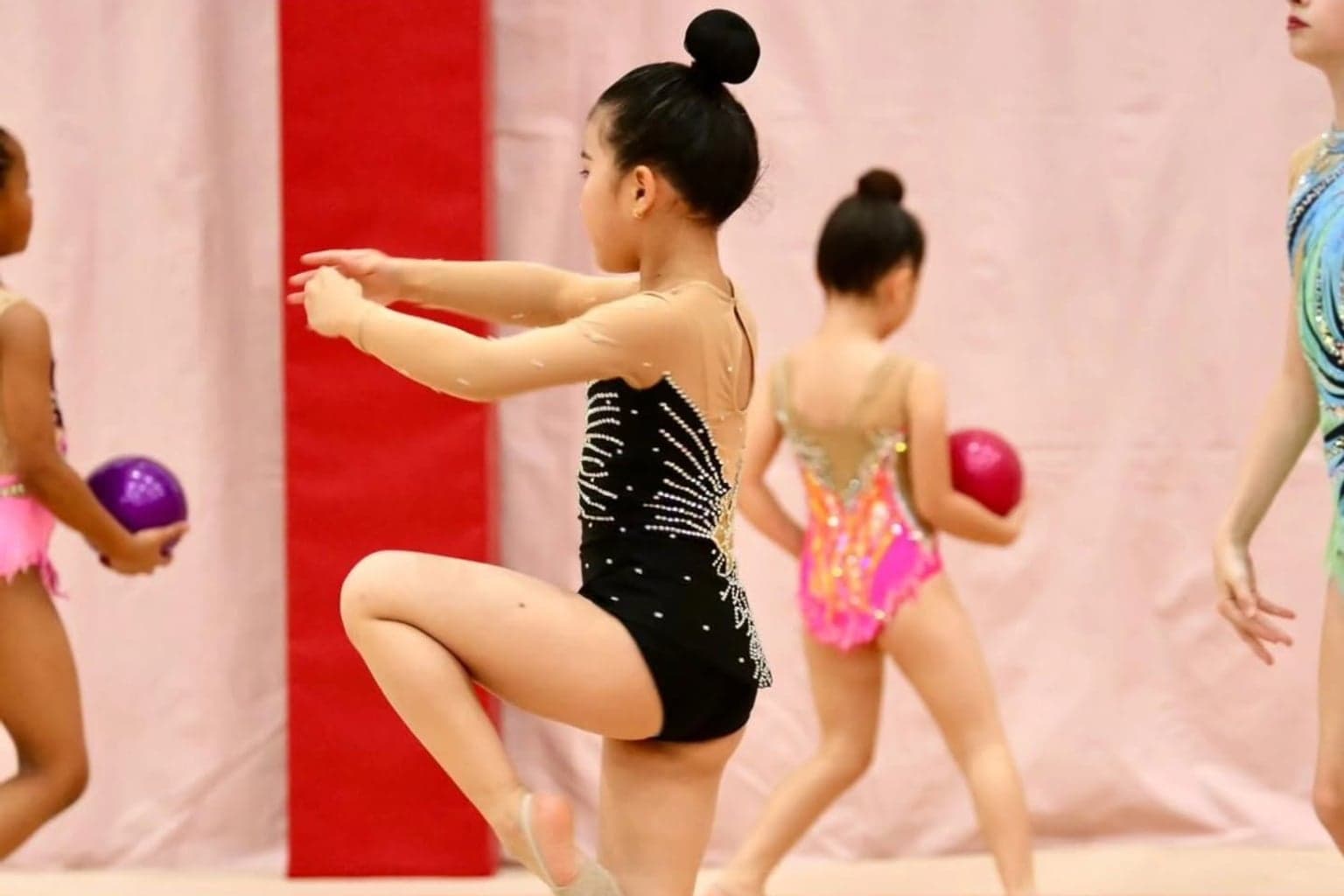
Throwing a ball behind your back and catching it requires shoulder flexibility. Performing a body wave while rolling a hoop along your arm requires spinal mobility. The apparatus itself gives a gymnast a reason to stretch further, reach higher, and move through a wider range of motion.
Flexibility by Age: What to Expect
Flexibility development tends to follow a broad pattern, though every child progresses at their own pace and the spread between children is wide.
Ages 3-5
In our Preschool Program, flexibility work is play-based. Early preparation for splits and basic back flexibility is folded into games and movement, and it is never forced. See our Preschool Program.
Ages 5-8
Flexibility is built gradually alongside the strength and control to use it. Back flexibility, shoulder mobility, and hip turnout are all worked on, and each child moves at her own pace. See our Beginners Program.
Ages 8-12
Flexibility work here is deliberate and progressive, starting from each girl's current range. Girls who have trained before keep building on what they have; new starters begin where they are. Each moves at her own pace.
Ages 12+
Teens can and do start here. Coaching is patient and progressive, working from her current range rather than to a target, and it is paced to the individual athlete.
Benefits Beyond the Gym
Flexibility and body awareness are useful well beyond this gym. What the training works on is what these sports draw on:
- Soccer and basketball draw on hip and hamstring mobility for stride length
- Swimmers use shoulder mobility for a longer, more efficient stroke
- Figure skaters rely on hip flexibility for spirals and leg extensions
- Martial artists need flexible hips and legs for higher, more controlled kicks
- Dancers of all styles use the turnout, back flexibility, and body lines this training develops
- Cheerleaders use splits, backbends, and body control constantly
Our Multi-Sport Flexibility classes are specifically designed for athletes from any sport who want these cross-training benefits without committing to the full rhythmic gymnastics curriculum.
The Ballet Connection
At Rhythmic Ribbon of Texas, flexibility training does not happen in isolation. Our ballet classes complement rhythmic gymnastics training by developing flexibility in a different way.
Ballet barre work develops hip turnout, foot articulation, and back flexibility through controlled, repetitive exercises. The Vaganova method we teach emphasizes whole-body movement and back strength, while the Balanchine method adds dynamic flexibility through fast, traveling combinations.
That is why we pair them. The two disciplines ask for range in different ways, and the habits built in one tend to support the other.
Start Building Flexibility
Starting younger gives a child more time to work with, which helps. Our Beginners Program takes new starters from 5 through 18, and our Multi-Sport Flexibility classes are open to athletes of any age.
Book a free trial class at our McKinney or Frisco studio and see what a class is like. Or contact us if you have questions about which program is right for your child.