
Ballet
Classical ballet blending the Vaganova and Balanchine traditions - the technical foundation of grace, discipline, and artistry in rhythmic gymnastics.
- Vaganova Method
- Balanchine Method
- Rhythmic Gymnastics Foundation
- All Ages Welcome
Not Supplementary - Foundational
Ballet is not an add-on to rhythmic gymnastics training. It IS the technical foundation. The basic body technique for rhythmic gymnastics is rooted in classical ballet, from beginner levels through Olympic-level competition.
At RRT, our ballet classes draw from two of the most respected traditions in classical ballet: the Vaganova method and the Balanchine method. Together, they give our gymnasts a broader technical vocabulary and deeper artistry than either method alone.
Our ballet classes welcome all ages and are open to gymnasts, dancers, and anyone who wants to develop strength, posture, musicality, and body control through the discipline of classical ballet.
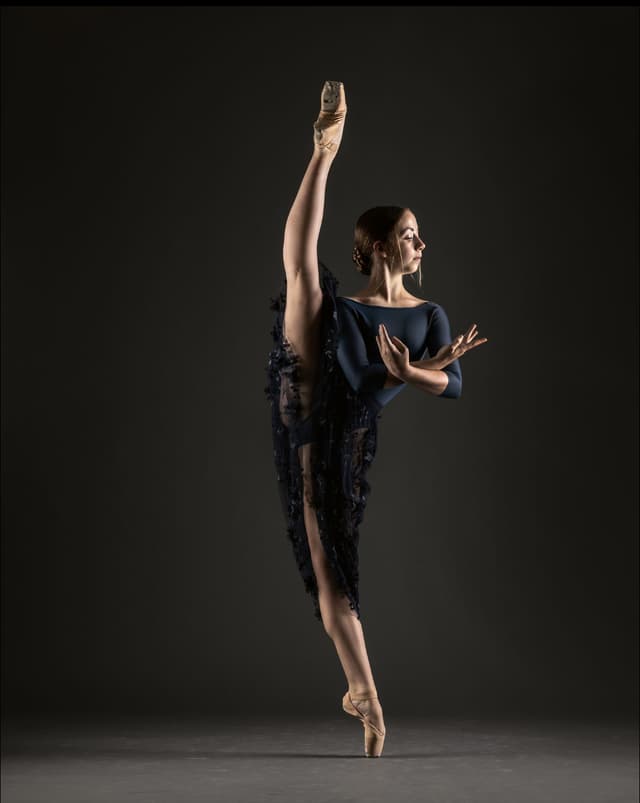
Why Ballet Matters for Gymnasts
Every aspect of ballet training transfers directly to rhythmic gymnastics performance and scoring. Here are the specific technical reasons.
Body Unity
Ballet teaches gymnasts to feel muscle tension as a continuous chain - from the shoulder blade through the arm to the fingertips, from the toes through the legs and spine to the crown of the head. This completeness of movement is what separates a high-scoring gymnast from one who just executes skills.
Bilateral Development
Barre work is performed on both sides - right hand on the barre, then left. This works both sides of the body equally and reinforces correct alignment, which balances the one-sided patterns many sports build.
Turnout & Hip Mobility
Ballet's emphasis on external rotation of the legs develops the deep rotator muscles of the hip, giving gymnasts the range of motion needed for high leg extensions, split leaps, and pivots that are scored in competition.
Postural Alignment Under Load
Ballet requires maintaining neutral spine alignment while limbs move through extreme ranges. This trains gymnasts to hold their center of gravity stable during apparatus manipulation - throwing a ball while simultaneously executing a turning leap.
Foot Articulation
Barre exercises like tendus, degages, and releves develop the intrinsic muscles of the foot, producing the fully pointed, arched feet that are a scoring requirement in rhythmic gymnastics.
Musicality
Every ballet exercise is performed to music with specific phrasing. Gymnasts internalize musical structure - counts, accents, legato vs. staccato - which directly transfers to how they interpret their competition music.
Two Great Traditions, One Complete Training
The Vaganova Method
Developed by Agrippina Vaganova at the Leningrad Choreographic School, the Vaganova method synthesizes the best of the French school (softness and elegance of arms), the Italian school (strength and virtuosity), and the Russian tradition into a single codified system.
Its central principle is that the body is one harmonious instrument. The back is the command center - Vaganova training builds extraordinary back strength and flexibility early, producing the fluid, expressive port de bras that are the hallmark of Russian-trained dancers and gymnasts.
- Whole-body movement - arms, torso, head, and eyes participate in every exercise
- Epaulement from early stages - the body is never flat to the audience
- Progressive eight-year curriculum: quality over quantity
- Deep emphasis on adagio (slow, sustained movements) for control and line
The Balanchine Method
Developed by George Balanchine, co-founder of the School of American Ballet and the New York City Ballet. Balanchine stripped away heavy theatrical storytelling and focused on pure movement in service of music. His training produces dancers who can cover more space in less time with exceptional rhythmic precision.
His approach to musicality is more granular than traditional methods: the legs define the rhythm while the arms define the melody. Dancers learn syncopated timing and must hit musical accents with split-second precision - directly useful for rhythmic gymnasts who must synchronize body movement and apparatus manipulation to music.
- Extreme speed of footwork, especially small, fast jumps
- Weight carried forward on the balls of the feet - a sense of readiness and attack
- Arms more open and expansive, creating longer visual lines
- Emphasis on allegro (fast movement) and spatial patterns
Why both? Vaganova provides the expressive, whole-body artistry and back strength that is the DNA of rhythmic gymnastics. Balanchine adds speed, sharp musicality, and spatial dynamism. Together, they produce a more complete gymnast than either tradition alone.
What a Ballet Class Looks Like
Ballet class follows the same fundamental structure used in professional dance training worldwide, adapted for our gymnasts.
Part 1: Barre Work
Standing sideways at a barre, one hand resting lightly for balance. Every exercise is performed on both sides. The sequence progresses from small, controlled movements to larger ones.
Plies
Slow bending and straightening of the knees in turned-out positions. Warms the joints, builds thigh and calf strength, teaches proper alignment of knees over toes.
Tendus
Sliding the foot along the floor to a pointed position and back. Builds foot articulation and teaches the brush action used in leaps and turns.
Degages
Like tendus but the foot lifts slightly off the floor. Develops quickness and sharpness of movement.
Rond de Jambe
Circular movement of the leg on the floor or in the air. Develops hip mobility and the turnout needed for rhythmic gymnastics.
Fondus
Slow single-leg bending. Builds the control needed for landings and sustained balances in routines.
Developpes
Slow unfolding of the leg to full extension (front, side, back). Builds the strength and control for the high leg holds that judges evaluate.
Grand Battements
Large, powerful leg swings. Builds dynamic flexibility and the explosive power needed for split leaps.
Part 2: Center Work
Away from the barre, gymnasts repeat similar exercises without support, then progress to more complex combinations.
Adagio
Slow, sustained combinations with balances, turns, and leg extensions. Builds the control and line that judges evaluate in competition.
Petit Allegro
Small, quick jumps that stay mostly in place. Builds foot strength and the rhythmic precision needed for fast footwork in routines.
Grand Allegro
Large traveling jumps, leaps, and turning jumps across the floor. These become the split leaps, stag leaps, and tour jetes of competition.
Part 3: Across the Floor
Traveling combinations that link steps together - chaines turns, pique turns, grand jetes, and other sequences that build the floor coverage and traveling patterns used in routines. Class ends with a reverence (a bow or curtsy), teaching respect and formality - a tradition that has been part of ballet for centuries.
From the Studio to the Floor
Every ballet skill has a direct counterpart in rhythmic gymnastics performance and scoring.
Port de Bras
→Graceful arm movements during apparatus handlingThe passage of the arms through specific positions with coordinated head and eye movement. In rhythmic gymnastics, the arms are constantly in motion - manipulating apparatus while simultaneously creating beautiful lines.
Pirouettes
→All turning elements in routinesBallet turns (pirouettes en dehors and en dedans, attitude turns, pique turns, chaines) are the direct foundation for every pivot scored in rhythmic gymnastics.
Grand Allegro
→Split leaps, stag leaps, tour jetesThe large traveling jumps and leaps in ballet class become the jumping elements that make up a significant portion of a routine's difficulty score.
Releve & Adagio
→Balances and sustained positionsThe ability to rise onto the balls of the feet and hold a sustained balance - trained extensively at the barre and in center work - is essential for every balance element in competition.
Plie
→Safe, silent landingsBallet trains a deep, controlled plie that functions as the landing mechanism for every jump. This transfers directly to safe, clean landings after leaps in routines.
Epaulement
→Three-dimensional performance qualityThe coordinated positioning of shoulders and upper body adds artistry and dimensionality to performance - the body is never flat to the audience. This raises both execution and artistry scores.
Benefits Beyond Gymnastics
Ballet training develops qualities that carry into every area of a child's life, whether or not they pursue dance or gymnastics competitively.
Posture
Children learn to align their bodies, engage their cores, and move with control. They stand straighter, walk more steadily, and sit with better posture at school.
Discipline & Focus
Ballet has a clear structure and etiquette. Children learn to listen, follow sequential instructions, and understand that sustained effort leads to measurable improvement.
Body Awareness
Ballet develops an unusually refined sense of where the body is in space. This proprioception is a foundational athletic skill that improves performance in any sport.
Confidence
Ballet teaches children to manage frustration, perform under observation, and take corrections without taking them personally. It builds comfort with one's own body.
Ballet for Gymnasts vs. Ballet for Dancers
What We Emphasize
- Faster progression through advanced elements - gymnasts arrive with extreme flexibility and strength
- More back flexibility exercises and upper-body expressiveness
- Floor-relevant combinations that mimic routine traveling patterns
- Port de bras designed for apparatus handling quality
- Demi-pointe (ball of the foot) rather than full pointe work
Common Corrections for Gymnasts
Gymnasts bring tremendous physical ability to ballet class, but they also bring habits that ballet helps correct.
- ✓Closing the ribcage - gymnasts tend to flare it open from back flexibility training
- ✓Engaging the pelvis to neutral - correcting the overarched lower back
- ✓Drawing the shoulders down during effort - not lifting toward the ears
- ✓Using control rather than momentum for leg extensions
In the Studio
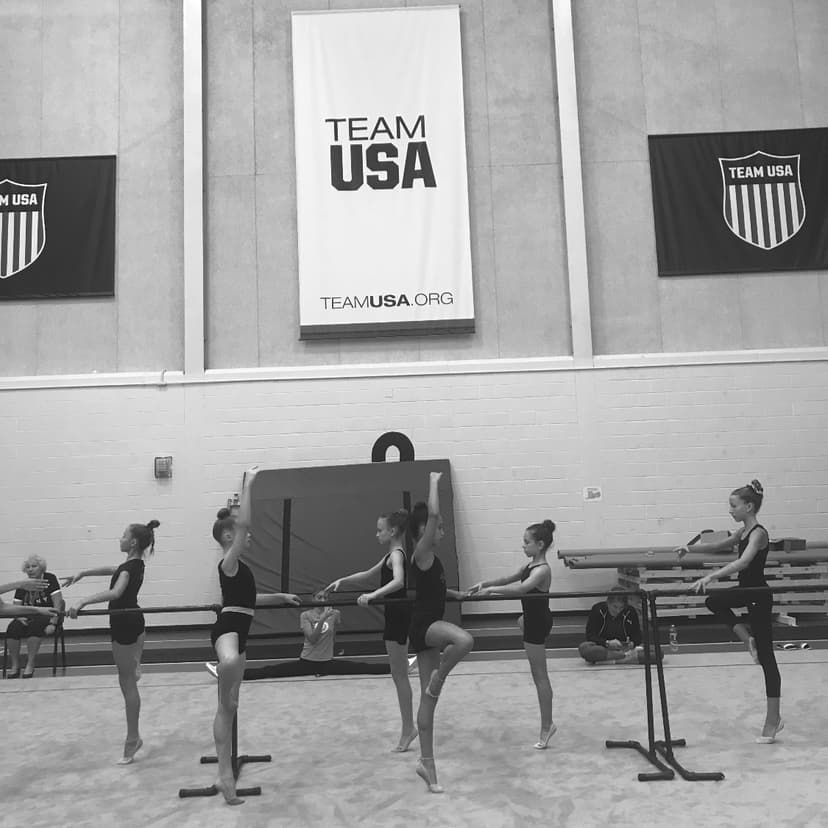
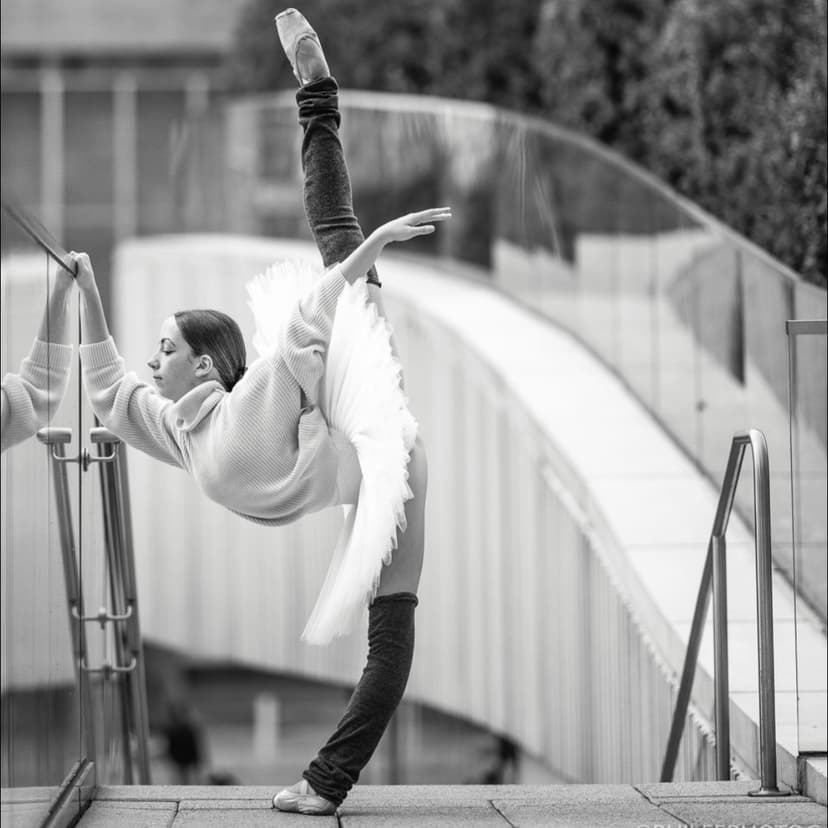
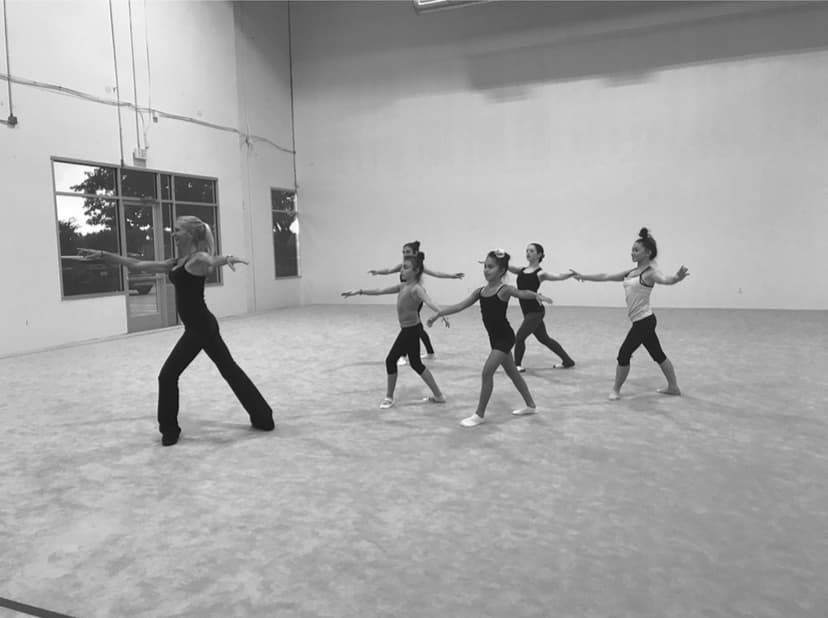
Open to All Ages
Our ballet classes welcome gymnasts at every level, dancers exploring classical technique, and anyone who wants to develop strength, posture, musicality, and body control. Contact us to learn about class times and availability.
Ready to Get Started?
Join us for a free trial class and experience the joy of rhythmic gymnastics.