Most parents sign their daughter up for rhythmic gymnastics for the obvious reasons. She loves to move. She is drawn to the ribbons and the music. Maybe she just needs somewhere to put all that after-school energy. Those are good reasons, and they are usually how it starts.
Confidence, focus, and self-discipline are harder to measure than a split or a clean ribbon toss. But they are real, there is some research on how activities like this can help, and after years of coaching girls in McKinney and Frisco, they are the changes we are proudest of. Here is how it happens.
How confidence grows
You cannot hand a child confidence. Tell a nervous girl she is brave and she usually knows better. What actually changes how she sees herself is doing something she was not sure she could do, and then doing it again.
Psychologists have understood this for a long time. The strongest source of genuine confidence, especially in physical activity, is what researchers call mastery: succeeding at something difficult through your own effort. Rhythmic gymnastics is built almost entirely out of these moments. Skills arrive in clear steps. A girl who could not hold a balance last month holds it this month. The ribbon that kept knotting starts to flow. Each small win is proof she can point to, and the proof is hers.
Being seen matters too. Performing a routine to music in front of coaches, teammates, and eventually a panel of judges is practice at standing in front of people and trusting herself. It is uncomfortable at first for nearly every girl. Then it is a little less so. That is exactly how confidence is supposed to grow.
What we see on the floor fits what some research has found. A 2020 study followed 104 girls aged 11 to 12 who did rhythmic gymnastics as an after-school activity in Spain. Girls whose coaches used a two-month, task-focused approach improved on their own starting scores for physical self-confidence and for their reasons for discipline, while physical self-concept scores fell in the group whose training stayed the same. The authors caution against applying the results to other sports or to children in general. More broadly, a 2015 analysis that pooled 38 studies of children and teens found small gains in self-concept and self-worth from physical activity programs, with larger effects in school and gym settings.
Focus you can see
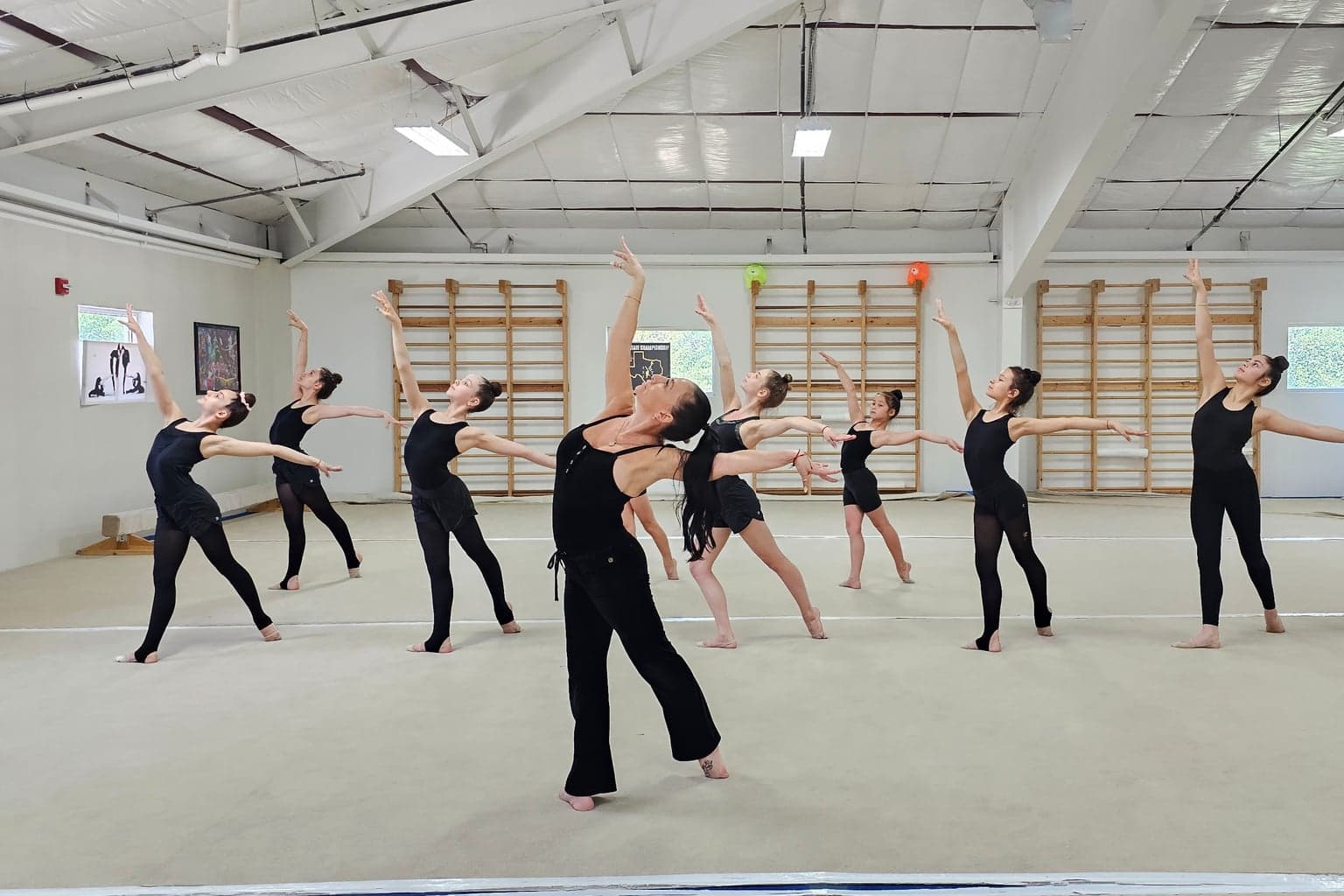
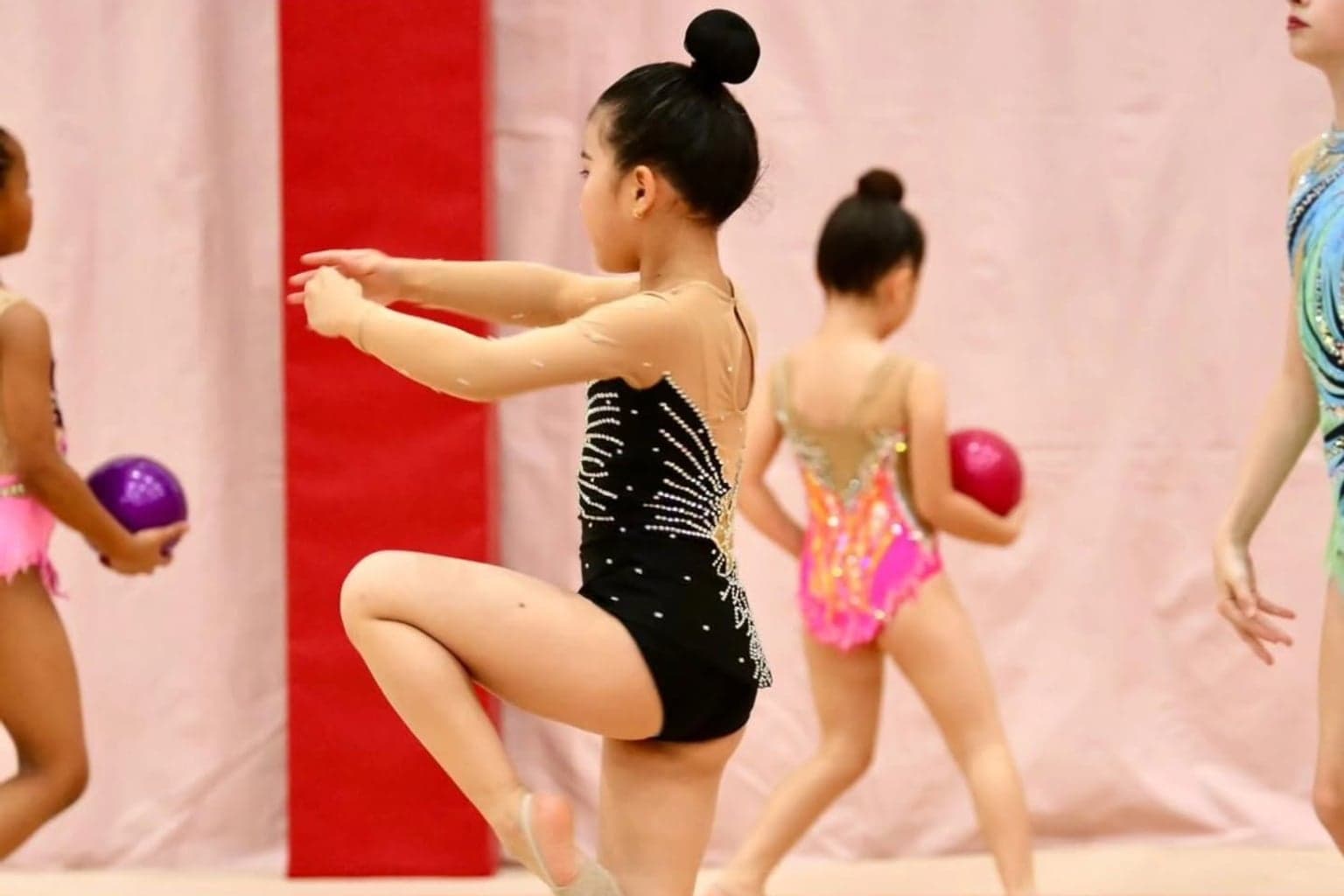
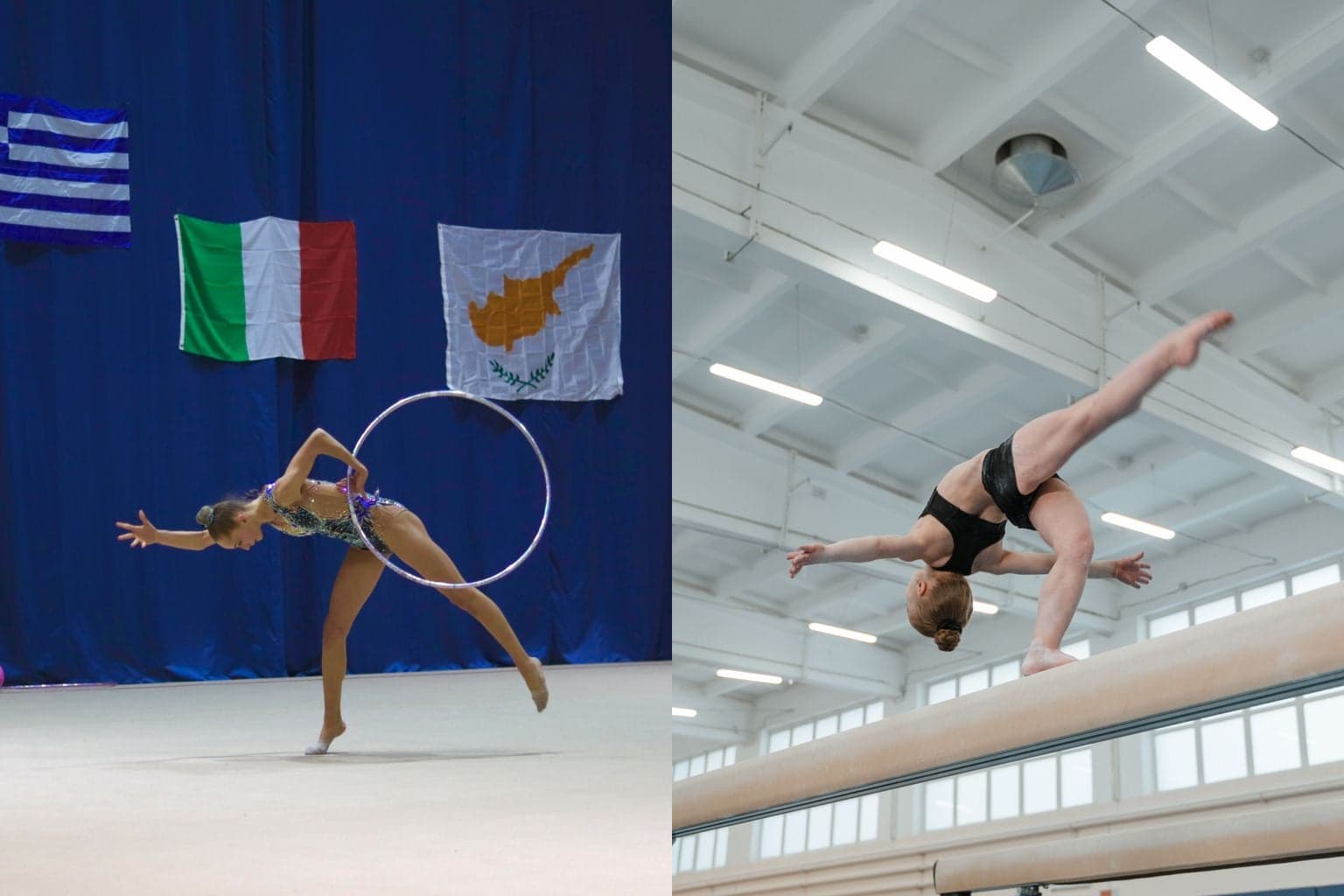
Walk past a rhythmic class and you might see a girl toss a hoop into the air, turn underneath it, and catch it without losing the beat of the music. She is tracking the apparatus, controlling her body, holding the musical count, and remembering what comes next, all at once.
That kind of divided attention uses the skills researchers group under executive function: focus, working memory, and the ability to switch between tasks. In one small study, four-year-olds who took eight weeks of street dance classes improved on all four attention, memory, and self-control tasks the researchers used, while a class that kept its usual free play and routine did not change. That compares dance with ordinary free play, not with other sports, and it tested one group of preschoolers. Rhythmic gymnastics is not dance, but it draws on the same blend of movement, music, and timing.
Memorizing a full routine adds another layer. A competitive floor routine is a long sequence of elements, counts, and transitions that a girl has to hold in her head and reproduce under pressure. That is sustained working-memory practice, repeated week after week.
A 2013 review of eight trials, published in the CDC's journal Preventing Chronic Disease, found some benefits of aerobic exercise for children's thinking and school achievement and no sign that the time hurt their learning, though the authors said it could not give a definite answer.
Self-discipline, the gentle way
Self-discipline has a stern reputation, but in a gym it usually looks quiet and ordinary. It is a girl choosing to hold a stretch a few seconds longer. It is coming back to the same skill she could not do on Tuesday and trying it again on Thursday.
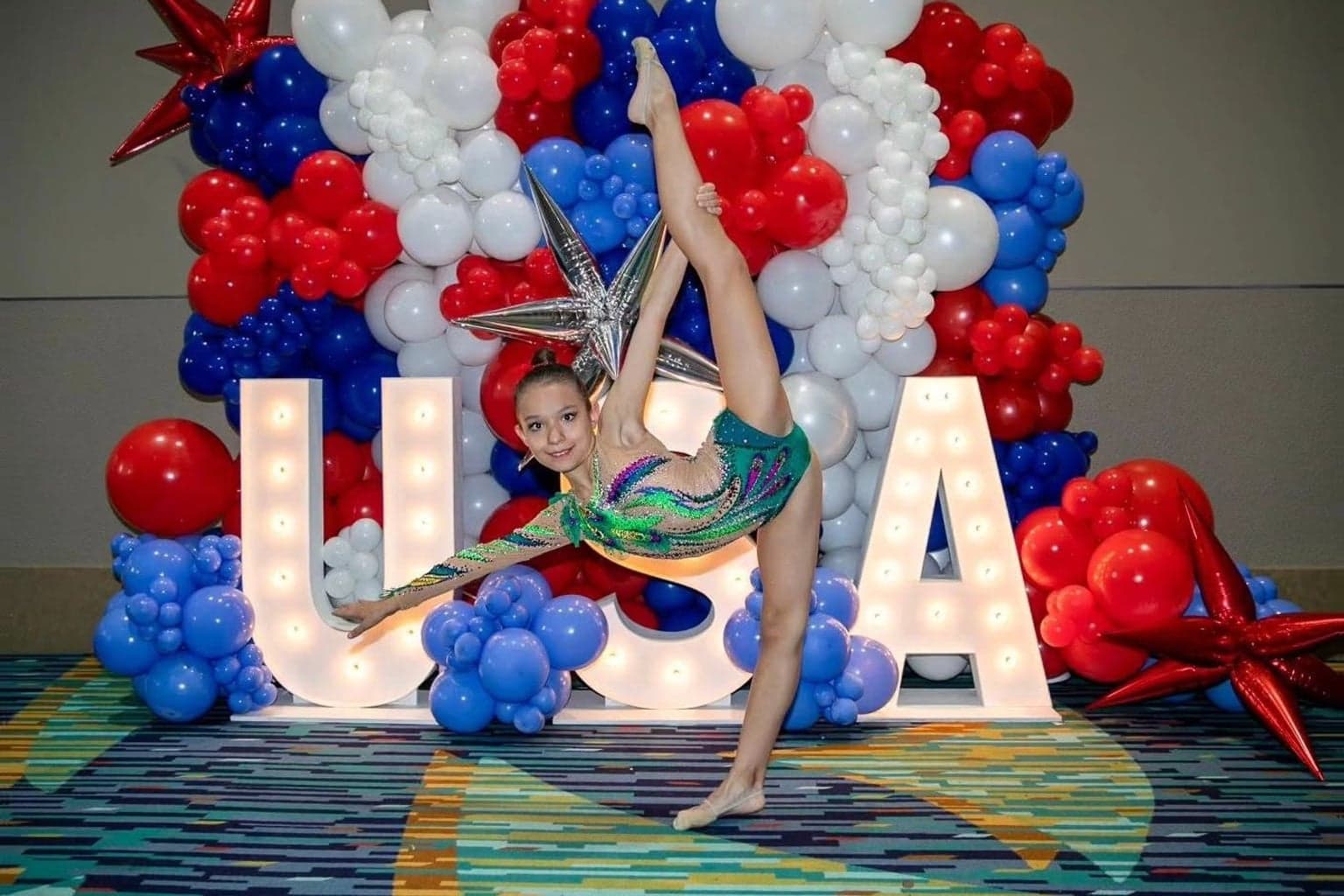
Flexibility is the clearest example. Splits and deep back flexibility do not arrive in a week. They come from consistent, slightly uncomfortable work spread over months. A girl who keeps showing up for that work learns, in her body, that effort today pays off later. That is delayed gratification, and it is a hard lesson to teach with words.
Routines teach the same thing in a different shape. A girl sets a goal, a clean routine by the next showcase or competition, and then chips away at it: try, get feedback, adjust, try again. That loop of planning, effort, and self-correction is how self-discipline gets practiced.
The research here is encouraging, but worth stating carefully. In that study of 104 girls, the gains came with a specific, supportive, task-focused coaching style, compared with usual training. That is the approach we choose on purpose.
Why this matters even more for girls
There are a few reasons this can matter in a particular way for girls.
The American Academy of Pediatrics reports that organized sports help children build their body, their brain, and their self-worth, and that sports teach goal-setting and emotional control. Advocacy groups such as the Women's Sports Foundation note that girls who play sports tend to have higher confidence and a more positive body image than girls who do not. There is also a well-documented pattern of girls dropping out of sports in their teen years, often because of self-consciousness and a fear of being judged. A girl who has a positive, supportive experience early is more likely to stay in the game.
This is also where we want to be honest. Sports that involve performance and appearance can, in the wrong setting, put unhealthy pressure on how a girl looks. The confidence we are describing does not come from that. It grows when coaching is supportive and centered on effort and mastery rather than appearance. That is the environment we work hard to build.
What it looks like on the floor
The research gives us the why. Day to day, here is what we actually see.
A girl is halfway through her routine and her ribbon catches and drops. The untrained instinct is to freeze, or to cry, or to walk off the floor. The trained instinct, the one we build over many small moments, is to pick it up and keep moving with the music. Learning to recover in front of people, without stopping, takes practice.
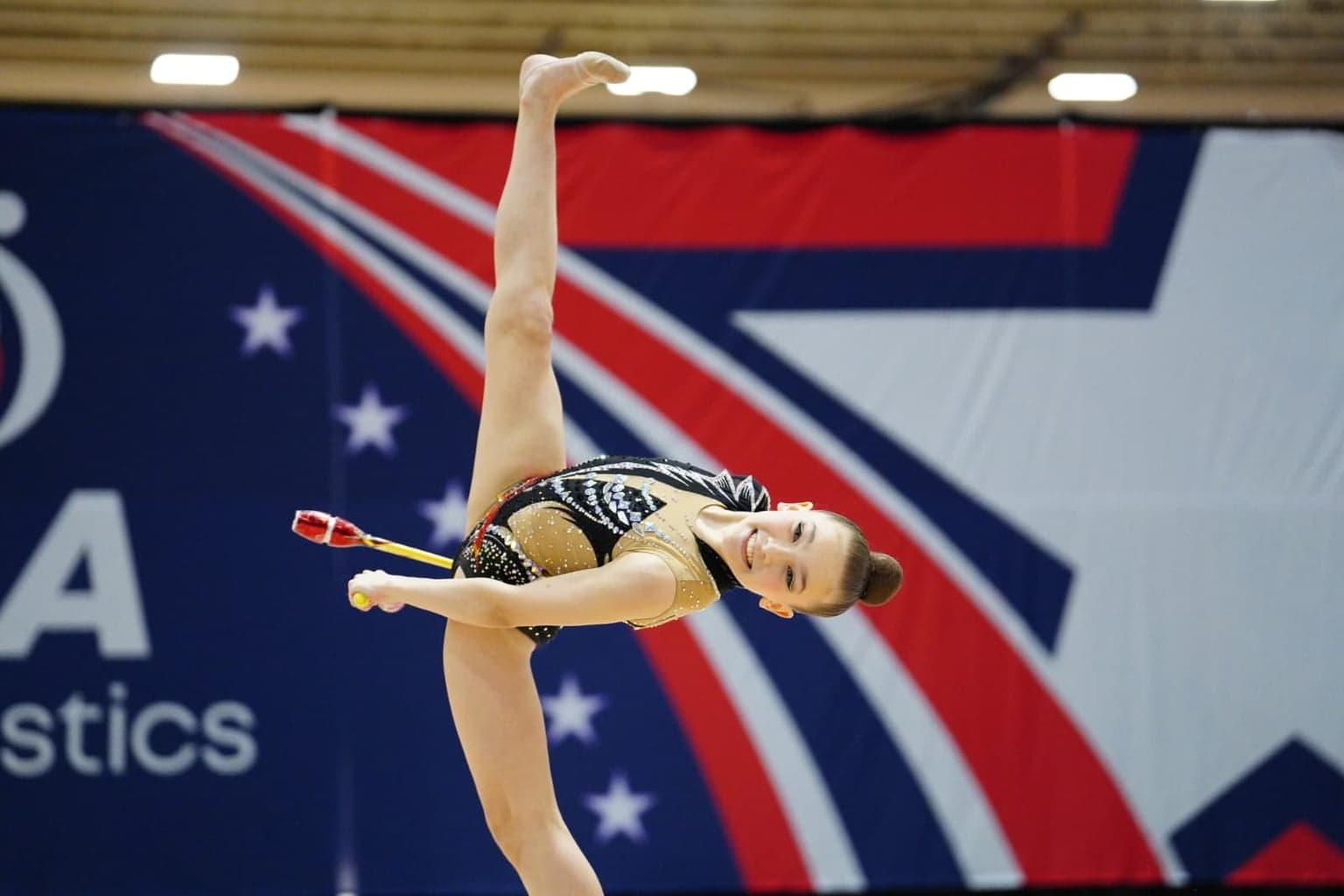
We see it the first time a shy girl performs a routine on her own and walks off an inch taller. We see it in the girl who fought her split for a whole season and then, on an ordinary afternoon, slides all the way down and looks up like she cannot believe it. We see it when a girl who used to quit at the first stumble starts asking to try the hard skill one more time.
None of these moments are dramatic. They are small, and they add up.
Common questions from parents
Will rhythmic gymnastics help a shy daughter?
It often does, when the setting is right. Shy girls are not pushed to perform on day one. They start by learning skills in a supportive group, collect small wins, and grow into performing at their own pace. Some of the most confident girls in our gym started out as the quietest ones. The goal is never to change her personality, only to give her proof that she can do hard things.
Does rhythmic gymnastics really help with focus at school?
We cannot promise grades, and the science is limited. A 2013 review of eight trials found some benefits of aerobic exercise for children's thinking and school achievement, and no sign that the time hurt their learning, though it could not give a definite answer. A small 2020 study found that dance classes improved attention and working memory in four-year-olds compared with children who kept their usual free play.
What age do these benefits start?
Earlier than most parents expect. Even our youngest gymnasts, ages three to five, are practicing focus, taking turns, and collecting the small wins that build confidence. The self-discipline side tends to deepen as girls get older and begin working toward routines and goals.
Is rhythmic gymnastics better for confidence than other sports?
Any positive sport experience can build confidence. What makes rhythmic gymnastics distinctive is the mix of visible skill progress, performing to music, and a supportive setting, which together give a girl many chances to succeed and be seen. One 2020 study of girls aged 11 to 12 in rhythmic gymnastics found gains in self-confidence and in their reasons for discipline when coaches used a task-focused approach. It did not compare rhythmic gymnastics with other sports.
Come see it for yourself
We will be straight with you. The science on rhythmic gymnastics specifically is still young, and we would never tell you that one activity will transform your child. What we see is that many girls who stay with this sport stand a little taller, focus a little longer, and bounce back a little faster, and the broader research on confidence, focus, and discipline points in the same direction.
The best way to know if it is right for your daughter is to let her try. A free trial class costs nothing and tells you more than any article can. If you are brand new to the sport, our guide on what to expect at a first class and our comparison of rhythmic and artistic gymnastics are good places to start, and if you are wondering about timing, here is our take on the right age to begin.
Book a free trial class or contact us with any questions. We coach girls in McKinney and Frisco, and we would love to meet yours.