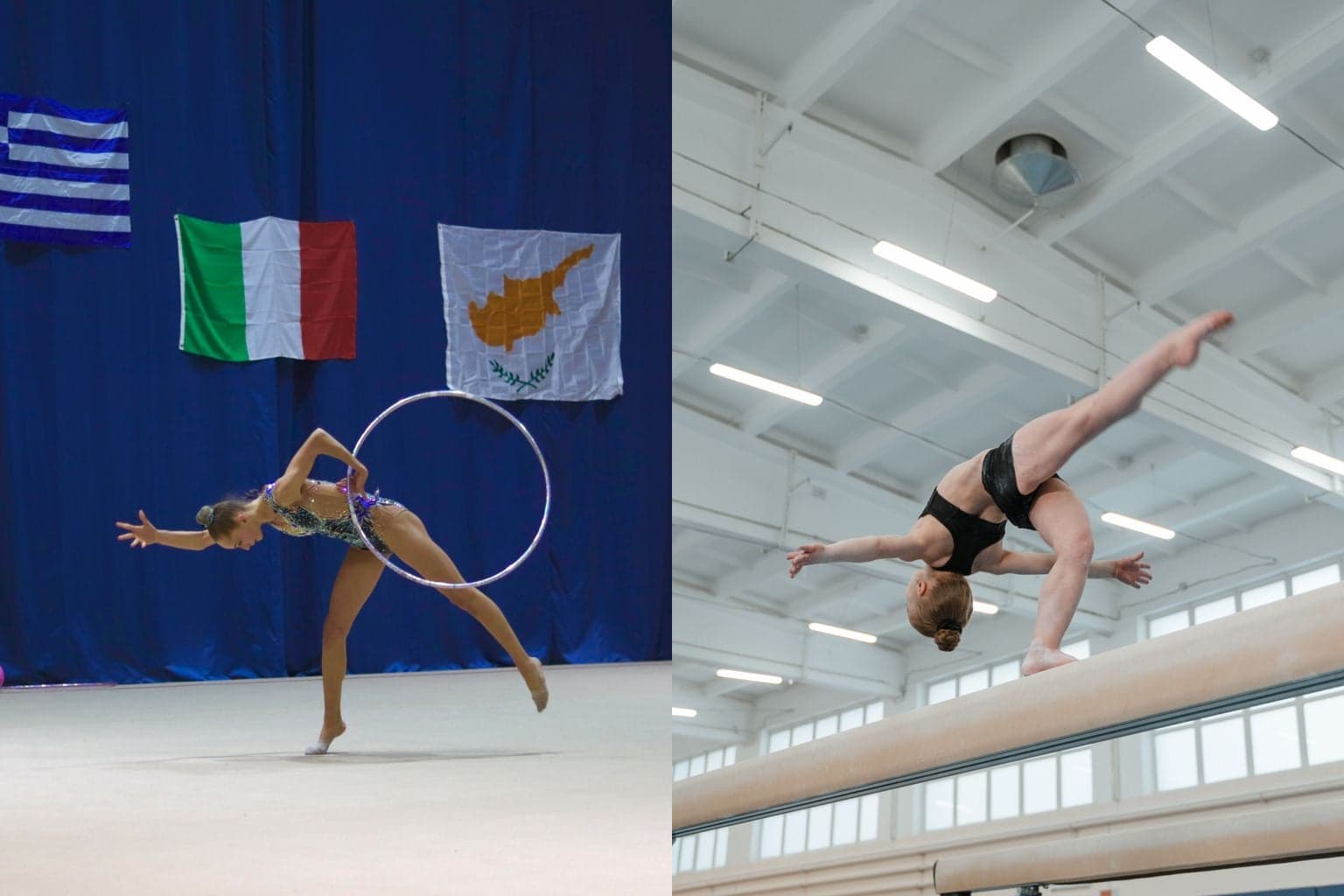
Sooner or later, many families want to know what competing would ask of their daughter and of them.
Maybe her coach mentioned the competitive team. Maybe she trains in dance or artistic gymnastics, saw a ribbon routine, and has not stopped talking about it. Either way, when you go looking for answers, most of what you find describes artistic gymnastics, which is a different sport with different equipment, a different season, and a different path.
Here is how the competitive path works in rhythmic gymnastics, and what it asks of your family, so you can decide whether an evaluation is the right next step.
What the competitive path asks of a family
Our Competitive Program is entered by invitation, through an evaluation, and every competitive gymnast holds a USA Gymnastics (USAG) membership. It is a real commitment for the gymnast and for her parents, and we would rather you know that going in.
Time is the biggest piece. Our competitive athletes train 6-30 hours per week depending on level, and the exact schedule is set after evaluation and current coach placement. There is more on our competitive program page.
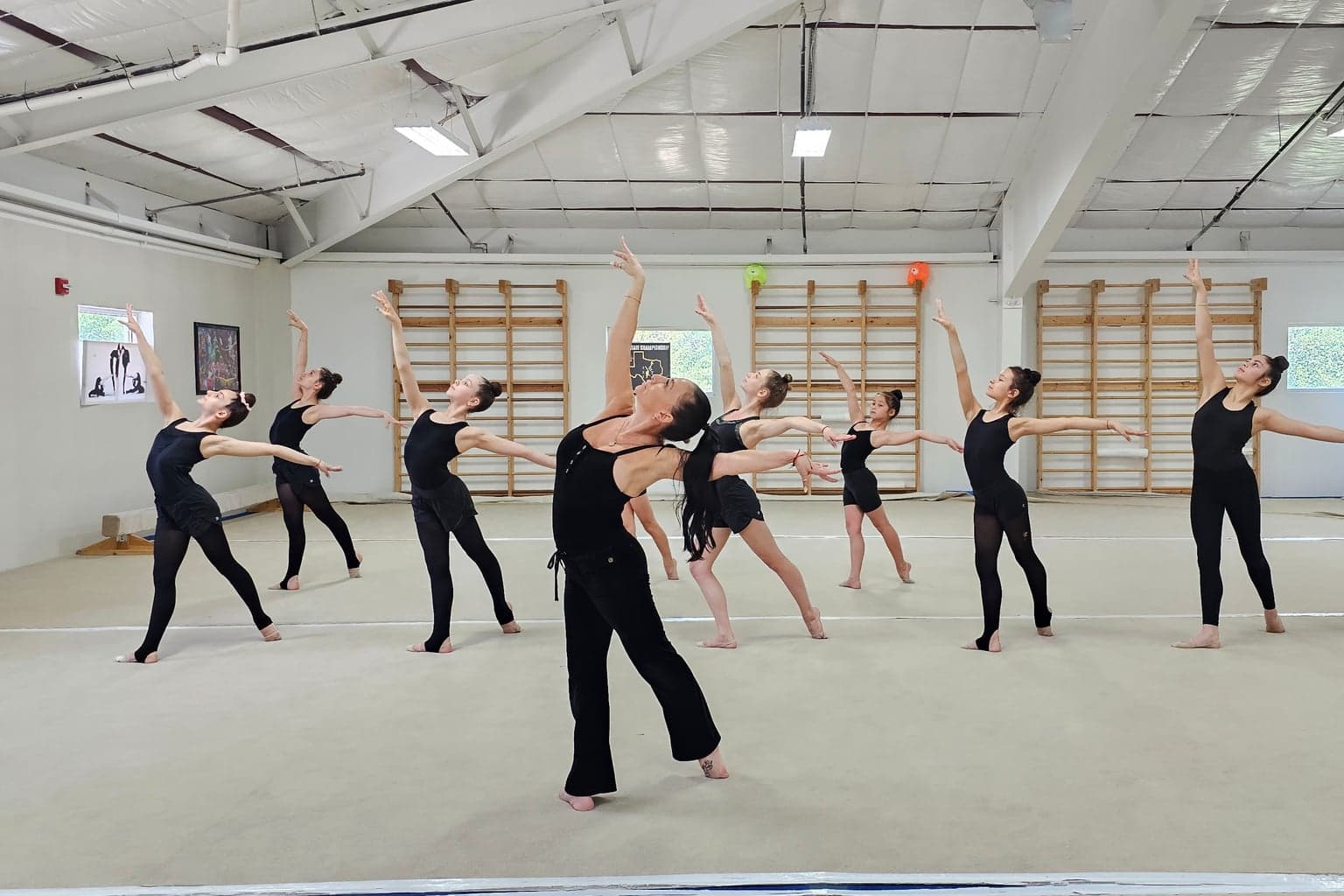
Ballet is part of RRT's competitive training because it supports posture, musicality, turns, balances, leaps, and performance quality.
Across the sport, competitive families typically budget for monthly tuition, meet entry fees, competition leotards, a set of apparatus, and travel. We keep a table of typical ranges on the competitive page; those are industry ranges rather than an RRT price list, and program fees are available on request.
Overnight travel is common for competitive families. How many meets a season involves, and where they are, varies by level and by season, so weekend travel belongs in the decision rather than arriving as a surprise.
What training and the season look like
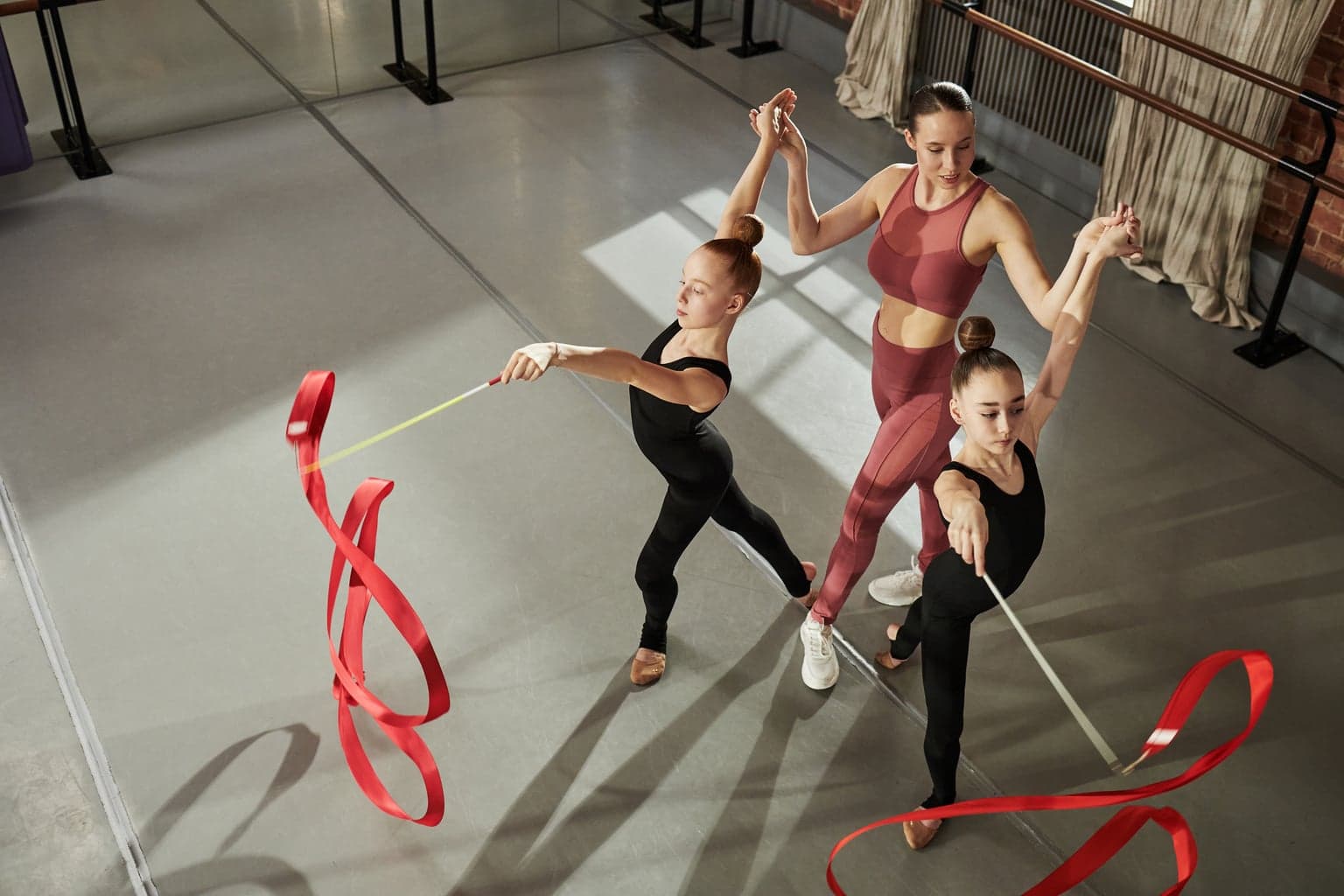
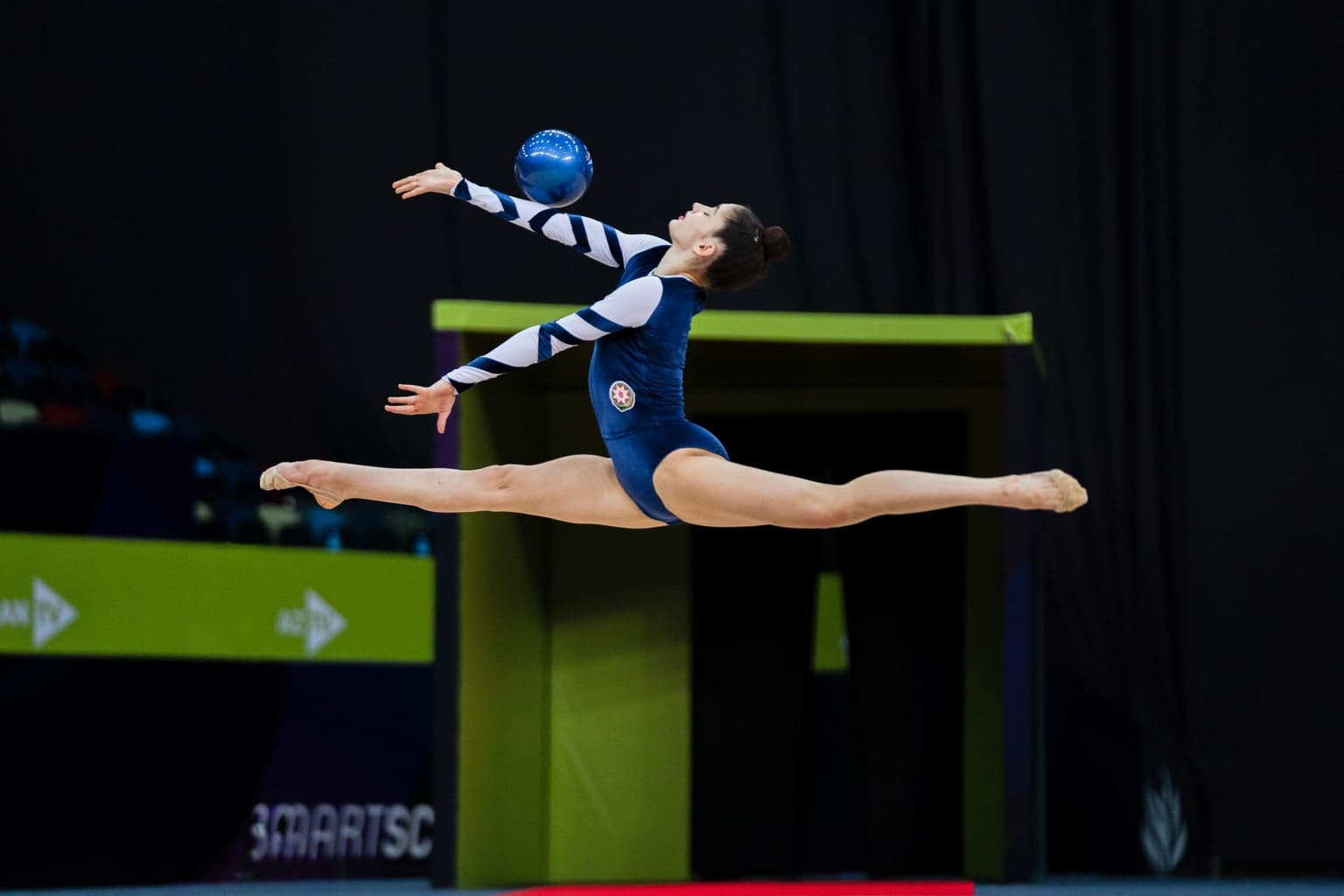
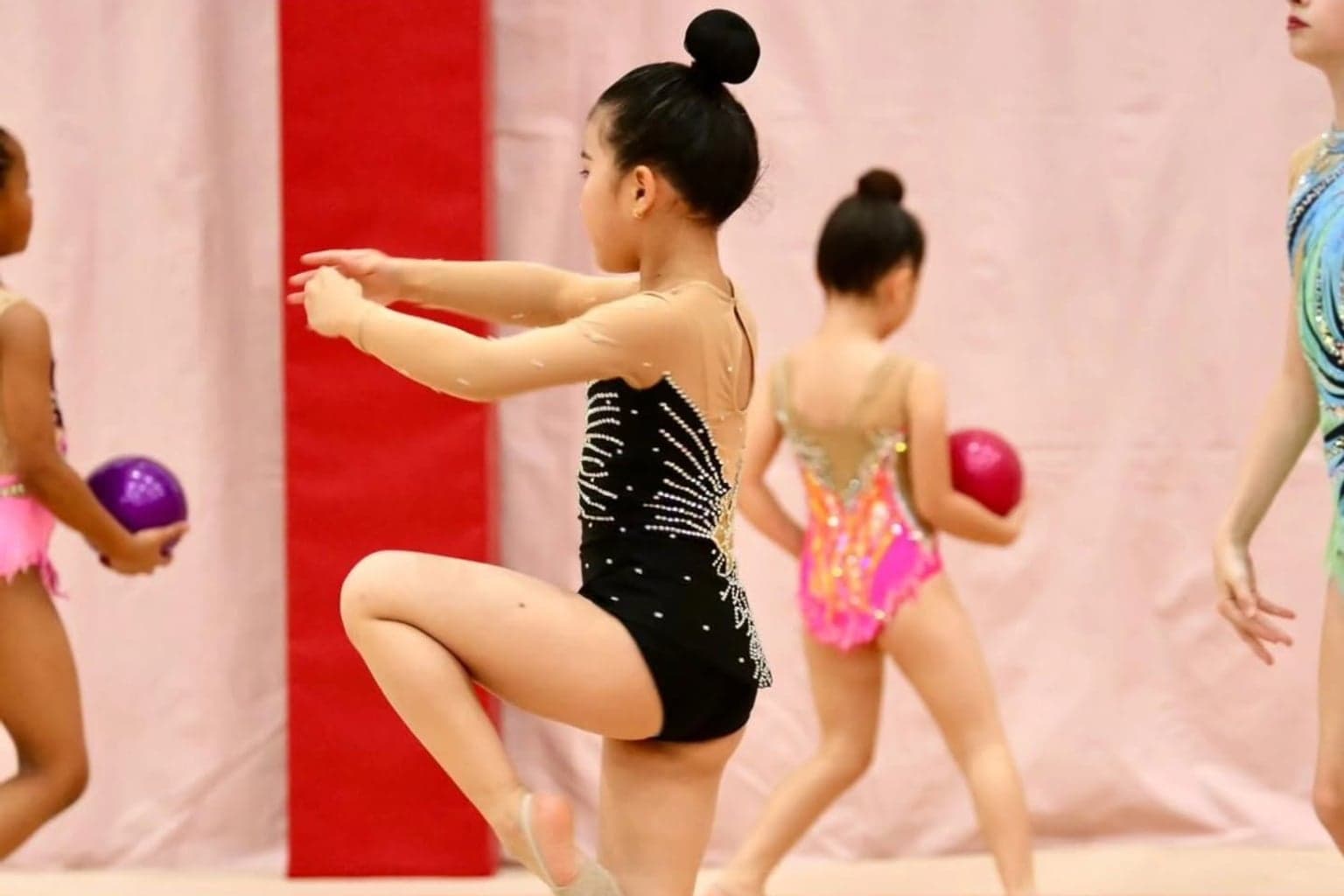
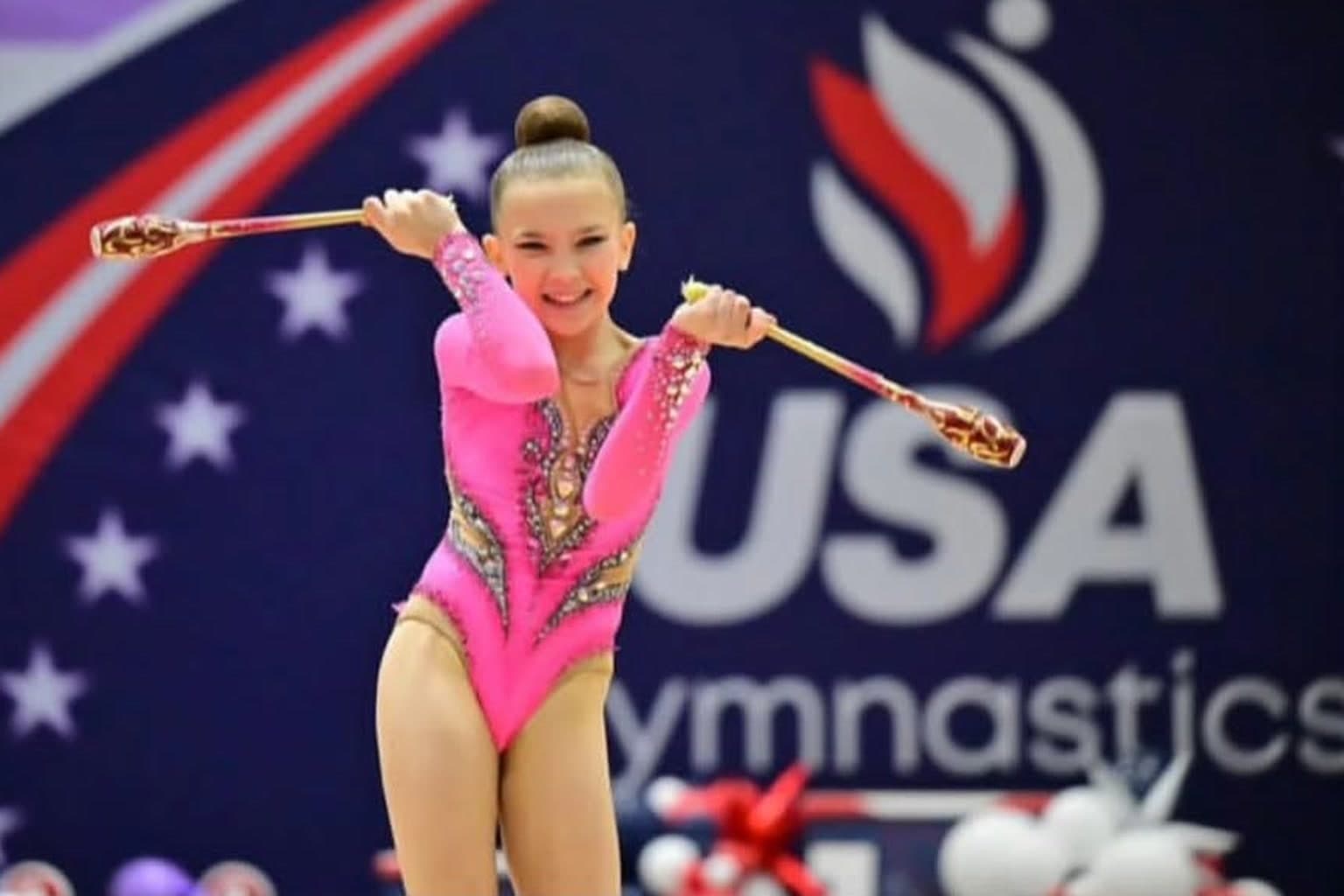
Competitive training covers the five apparatus (rope, hoop, ball, clubs, and ribbon), body difficulties such as leaps, balances, and pivots, strength and conditioning, and choreography. The competition load builds gradually: under USAG rules, a Level 3 gymnast competes two routines, floor exercise and one apparatus, and the full all-around of four individual routines arrives at Level 5.
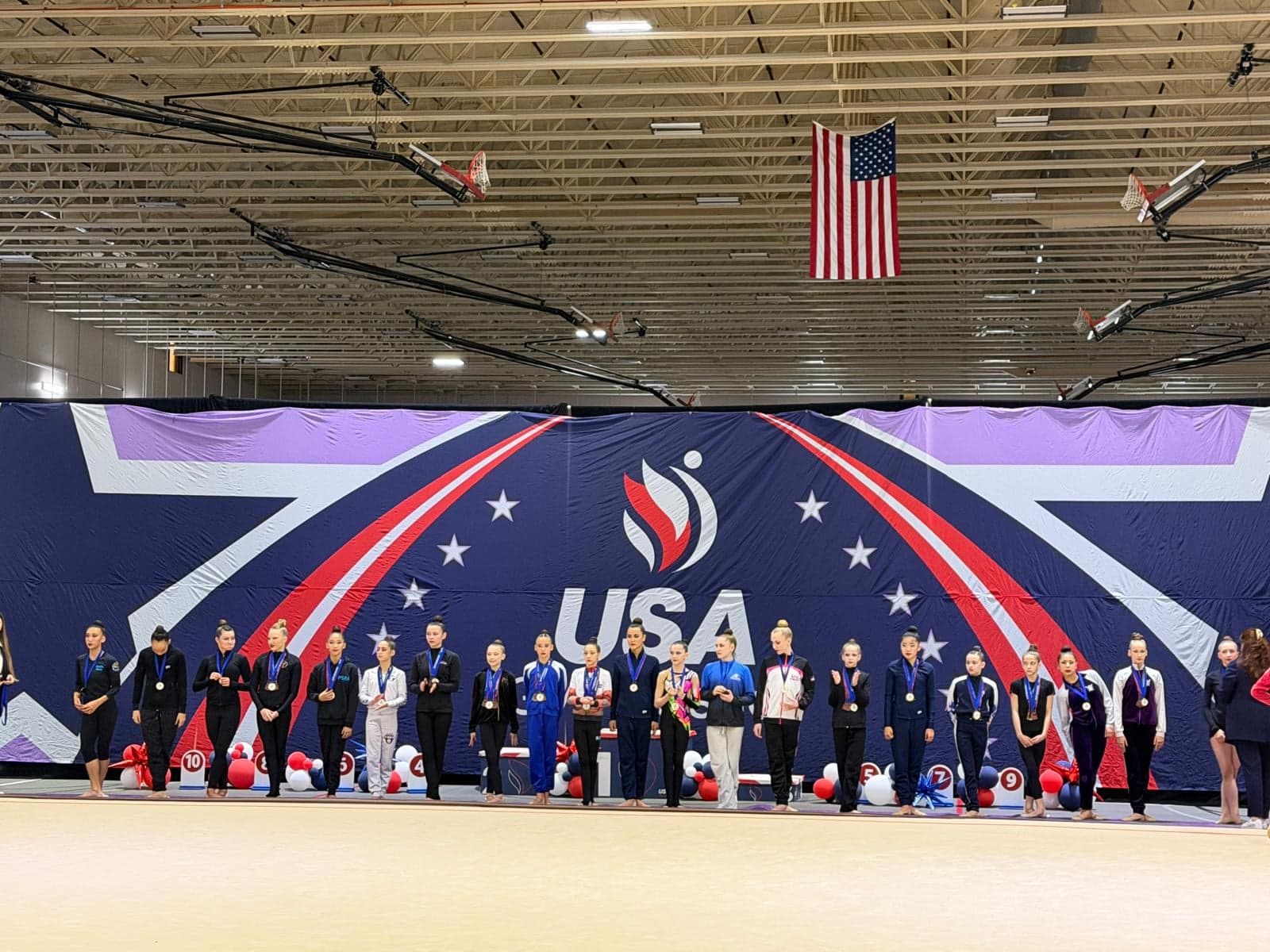
The competition season runs February through June. Invitational meets open it, State Championships usually land in March and April, Regionals follow (Texas is in USAG Region 6), and the national championships close it out in June. Exact dates vary by level, region, and season. From July through January the gym shifts to training season: new routines, conditioning, and preparing each gymnast for the level she will compete next.
USA Gymnastics also defines its competition year as August 1 through July 31, which is what sets age divisions and level eligibility. So you will hear “new season” in August even though the first meet is months away in February. If your daughter is new to rhythmic gymnastics, neither date is a deadline. Beginner classes run year-round, and the competition calendar becomes relevant after a gymnast joins the team.
How a girl is evaluated
Families usually arrive at this question one of two ways. Either a girl has been in our Beginners Program and readiness has come up with her coach, or she trains in another sport, often dance, artistic gymnastics, or cheer, and wants to try rhythmic. Either way, placement on the team is invitation-based, and families may request an evaluation whether or not she has rhythmic experience.
Subject to USAG age minimums, the coach determines the entry level for a first-time Development Program (DVP) gymnast based on skill and readiness. The evaluation request gives the coach information about her age, background, and rhythmic experience before discussing the next step.
What her first competition helps parents understand
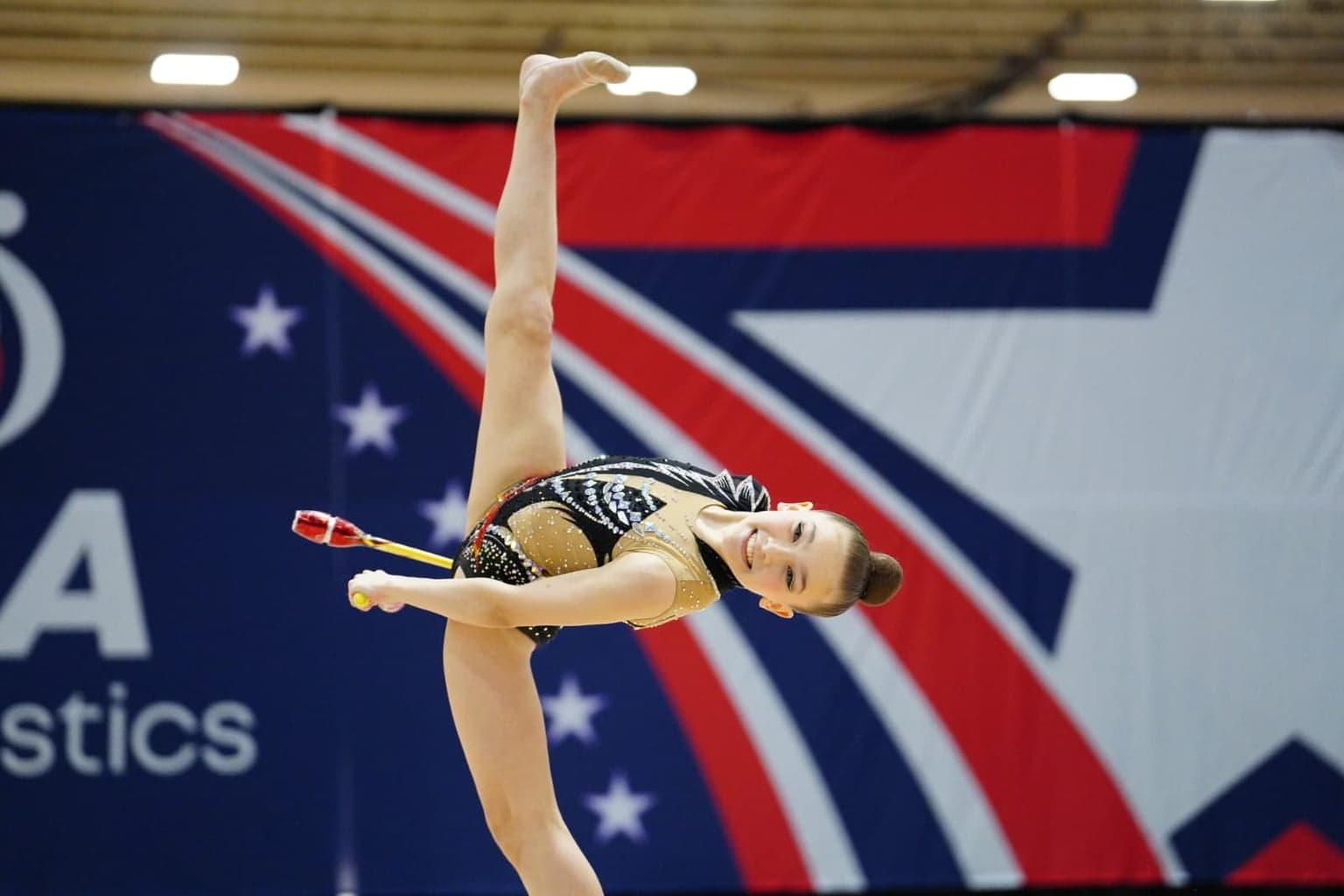
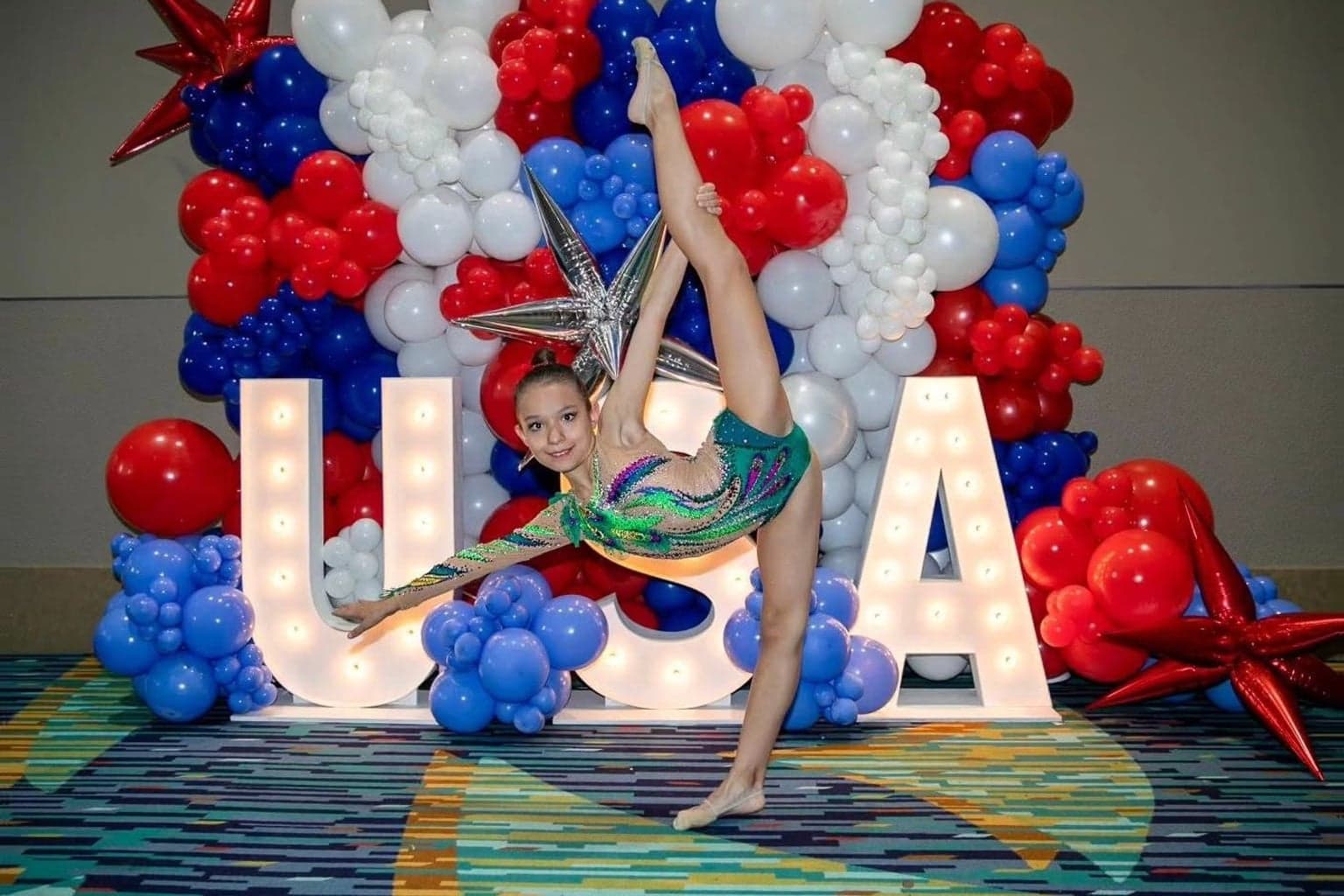
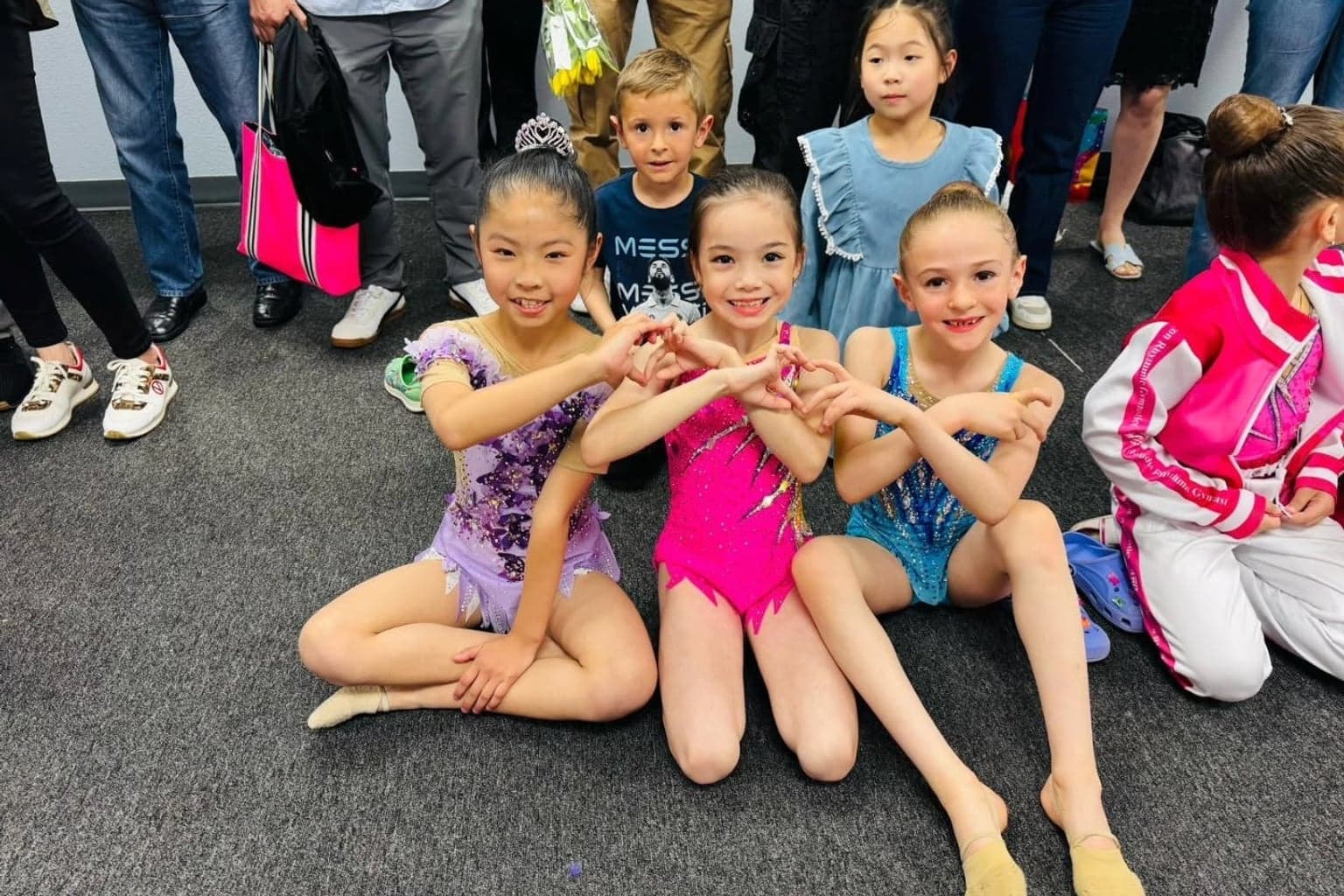
Her routines may add up to only a few minutes, but those minutes represent months of preparation. What a meet shows a family is everything around them: a floor shared with gymnasts from other clubs, and a girl learning to perform in front of judges, respond to the result, and return to training.
Reviews of youth sports research find that when the adults around a young athlete focus on outcomes, scores and placements, higher performance anxiety tends to follow, while effort-focused support goes with less worry (2025 research review; AAP guidance). In training we build goal-setting around personal performance rather than placement. Parents can help by keeping their comments focused on effort and progress rather than scores or placement.
Signs the competitive path may or may not fit
There is no test for this, but the program's real expectations suggest the questions worth asking.
It may fit if:
- She keeps asking for more gym time, not less. Competitive training means multiple sessions a week, every week.
- Your family calendar can absorb a standing training schedule plus meet weekends from February to June, some of them out of town.
- She likes performing, or wants to learn to. Every meet means routines in front of judges.
- She can work toward something that takes months. Routines are built and polished across a whole training year.
It may not fit yet if:
- Once a week is her happy pace. That is what the Beginners Program is for, and it is a full program in its own right. Girls develop at their own pace there, and readiness for the competitive track is a conversation to have with her coach.
- The family schedule cannot take on meet-season weekends right now.
- She loves the sport but does not yet want to perform in front of judges. There is no rush.
The not-yet path is a real one: confidence grows with training, and the Beginners Program is where that happens. If she is new to rhythmic gymnastics and not yet ready for an evaluation, a free Beginners trial in McKinney or Frisco is the simplest place to start. Here is what a first class looks like.
Request an evaluation
If the competitive path sounds like your daughter, request an evaluation. Tell us about her age and her sports background; rhythmic experience is a plus, not a requirement. RRT teams have competed since 2009. You can see competition highlights on our achievements page and in our photo gallery.