
Competitive Program
For athletes ready to train seriously and represent RRT at USAG championships - from local invitational meets to national and international competition.
- By Invitation Only
- USAG Sanctioned
- Individual & Group
- Year-Round Training
Where Artistry Meets Athletics
Rhythmic gymnastics is one of the few Olympic sports that equally values artistic expression and athletic performance. Competitive gymnasts must be strong, flexible, agile, and coordinated while performing routines that flow seamlessly to music.
Athletes compete both as individuals - performing solo with a single apparatus - and in groups of five, performing synchronized routines that may include apparatus exchanges between gymnasts.
Our competitive athletes are segmented by age and skill level under USAG guidelines. Training includes advanced apparatus techniques, body difficulty elements, ballet and dance, strength and conditioning, and choreography and routine construction.
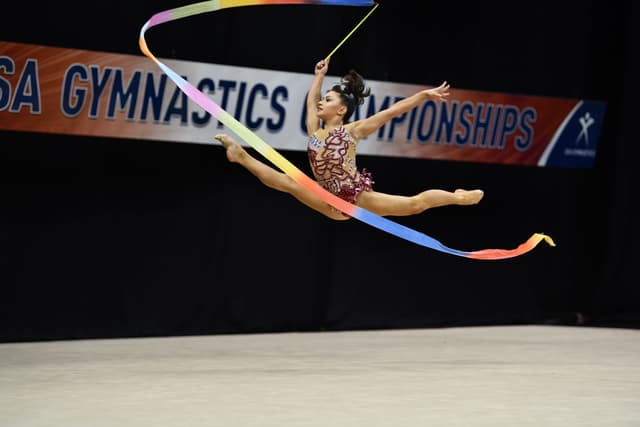
USAG Competitive Levels
USA Gymnastics organizes rhythmic gymnastics into a Development Program (DVP) with pre-competitive Levels 1-2 and competitive Levels 3-8, a separate Rhythmic Xcel track, and a FIG track (USA Hope, Junior, and Senior) that leads to the Elite designation. Advancement is based on skill mastery and coach recommendation, not just age.
RRT competitive athletes train 6-30 hours per week depending on level. Exact schedule is set after evaluation and current coach placement.
Levels 1-2
Pre-CompetitiveIntroductory and recreational levels. Gymnasts learn basic body and apparatus skills, and compete a floor routine plus 2 apparatus routines at in-house events.
Level 3
Entry CompetitiveThe first official USAG competitive level. Gymnasts compete two compulsory routines set by the club, floor exercise plus one apparatus routine, at local and invitational meets.
Level 4
First Championship LevelFirst level eligible for State and Regional Championships. Gymnasts compete two individual apparatus routines plus a synchronized group floor routine, set by the club.
Level 5
Full All-Around LevelGymnasts compete four individual routines, floor exercise plus three apparatus routines, as well as a group floor routine. Competes at invitationals, State and Regional Championships, and the Level 4-5 Classic.
Levels 6-8
Transitional / Pre-FIGGymnasts perform four individual routines, floor exercise plus three apparatus routines, and prepare for the advanced skills of the FIG program. Levels 6-8 can qualify to the national Development Program Championships.
USA Hope, Junior & Senior
FIG / Elite TrackFor gymnasts who have completed the Development Program levels. Routines follow the full FIG Code of Points, and gymnasts who qualify to the USA Gymnastics Elite Championships earn the Elite designation, the highest competitive level. The top athletes represent the U.S. internationally.
How Routines Are Scored
At Levels 7 and above, routines are scored under the FIG (International Gymnastics Federation) Code of Points using three independent judging panels. The final score combines all three: D + A + E, minus penalties.
Difficulty (D)
Max: 10.0Four judges evaluate technical value: body difficulty (jumps, balances, rotations), apparatus difficulty (mastery, originality, risk), dynamic elements (throws with body rotations during flight), and dance step combinations.
Artistry (A)
Max: 10.0Four judges evaluate artistic composition: connection between music and movement, expressiveness and body language, use of the full performance space, and contrast in tempo, character, and intensity.
Execution (E)
Max: 10.0Four judges evaluate technical execution: amplitude of elements, precision of body shapes, landing quality, and apparatus handling errors. Deductions range from 0.10 (small) to 1.00+ (apparatus loss).
Competition Season
The U.S. rhythmic gymnastics competition season runs from February through June, within a USA Gymnastics competition year that runs August 1 through July 31 and sets each gymnast’s age division and level eligibility. Texas falls in USAG Region 6 for rhythmic gymnastics.
Beyond the Physical
Mental Preparation
Competitive rhythmic gymnastics is as much a mental discipline as a physical one. Our coaching includes mental preparation techniques that build resilience and performance confidence.
- Breathing techniques and calming routines before competing
- Mental rehearsal and visualization of full routines
- Goal-setting focused on personal performance, not placement
- Building resilience after drops, falls, or tough scores
- Positive self-talk and managing competition anxiety
Teamwork & Sportsmanship
While individual routines get the spotlight, the competitive experience is deeply team-oriented. Gymnasts train together daily, support each other at meets, and perform as a unit in group routines.
- Group routines require perfect synchronization among 5 gymnasts
- Shared training builds bonds that extend beyond the gym
- Supporting teammates through competition nerves and setbacks
- Learning to be gracious in both victory and disappointment
- Building discipline, time management, and accountability
What Parents Should Know
The competitive pathway is a significant commitment for the entire family. Here is a transparent overview of what to expect.
| Category | Typical Range | Notes |
|---|---|---|
| Monthly Tuition | $100-$500+/month | Varies by level and training frequency |
| Competition Entry Fees | $75-$150 per meet | 4-8+ meets per season |
| Competition Leotards | $250-$450 each | Custom-designed for routines |
| Full Apparatus Set | $245-$395 total | Ball, rope, ribbon, hoop, and clubs |
| Travel | $500-$3,000+/season | For out-of-state competitions |
| USAG Membership | Annual fee required | Mandatory for all competitive gymnasts |
Tips for Managing Costs
- ✓Buy and sell used leotards between seasons
- ✓Purchase used apparatus (can save 30-50%)
- ✓Ask about multi-child discounts (10-20% at many gyms)
- ✓Carpool with other gym families for competitions
- ✓Plan travel well in advance for better rates
- ✓Budget for the season upfront to avoid surprises

How to Join
The Competitive Program is by invitation only. Entry requires an evaluation for appropriate level placement, a high level of commitment from both the gymnast and parents, and an active USAG membership.
If your child is currently in our Beginners Program and showing strong potential, speak with their coach about readiness for the competitive track. We also welcome girls coming from other sports - dance, artistic gymnastics, cheer, and more - even with no rhythmic experience yet. Request an evaluation below.
Request a Competitive Evaluation
Tell us about your athlete and we’ll reach out to set up an evaluation. Rhythmic experience is a plus, but girls from other sports are welcome to try out too.
Ready to Get Started?
Join us for a free trial class and experience the joy of rhythmic gymnastics.